

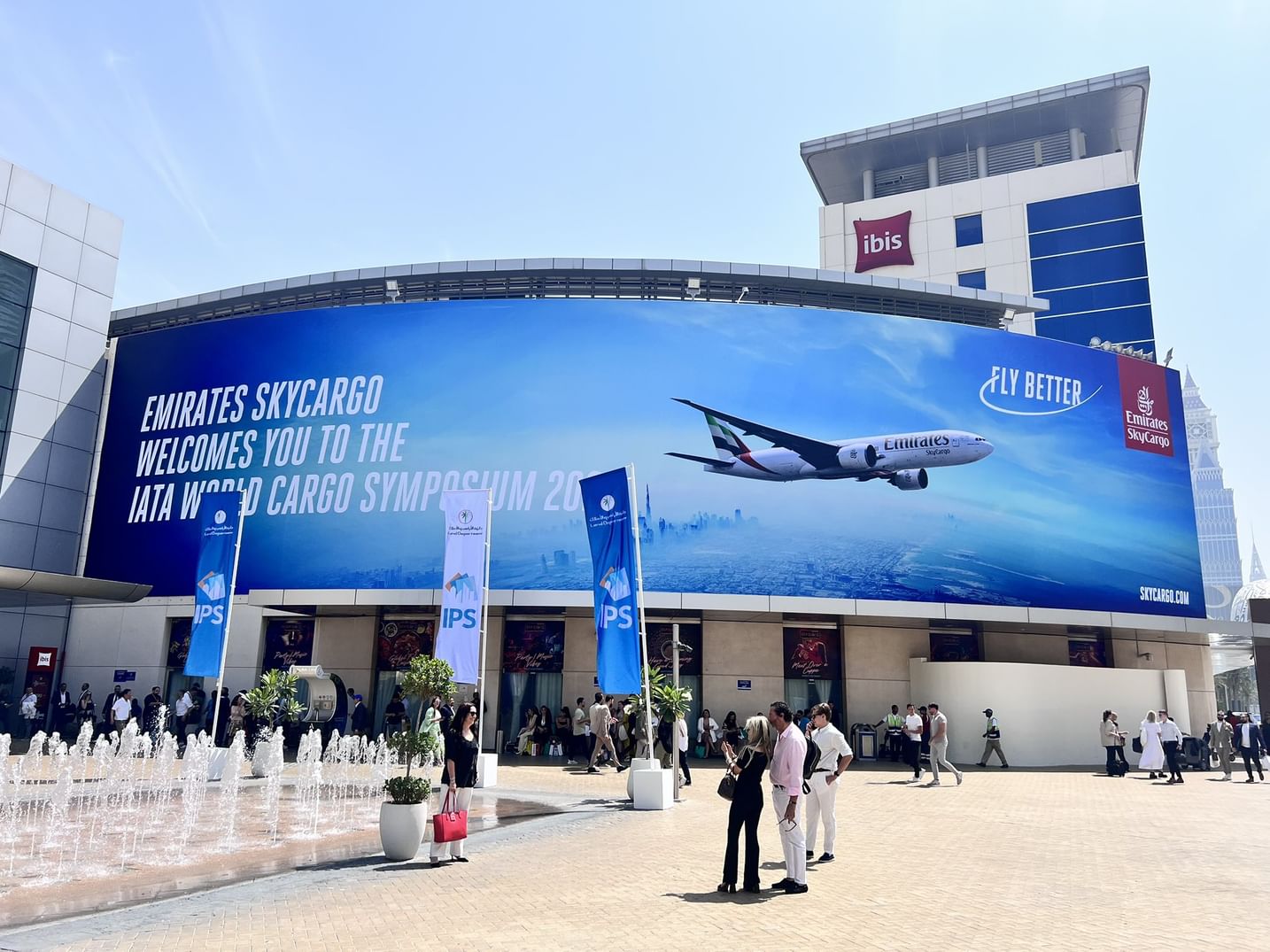
DUBAI, 15th April 2025 (WAM): The 18th edition of the World Cargo Symposium (WCS), organized by the International Air Transport Association (IATA), officially opened today in Dubai in the presence of H.H. Sheikh Ahmed bin Saeed Al Maktoum, Chairman and Chief Executive of Emirates Airline and Group. The forum runs from 15th to 17th April and brings together industry leaders to address the evolving challenges and opportunities in global air cargo.
Abdullah bin Touq Al Marri, UAE Minister of Economy, delivered the keynote address, declaring that the air cargo industry stands at a pivotal crossroads. He noted that while the sector is experiencing rapid growth, driven by the rise of e-commerce and increasing demand for fast logistics services, it must also navigate complex global dynamics, including geopolitical instability, evolving regulations, and pressing environmental concerns.
Highlighting the UAE’s leadership in sustainable aviation, Al Marri emphasized the country’s ambitious climate goals, including a national roadmap to produce 700 million litres of sustainable aviation fuel (SAF) annually by 2030. He also stressed the transformative role of digitalisation in the cargo sector, pointing to artificial intelligence, predictive analytics, and integrated logistics platforms as key tools to drive efficiency and ensure compliance.
Brendan Sullivan, IATA’s Global Head of Cargo, underscored the crucial role air cargo plays in sustaining global supply chains, supporting international trade, enabling e-commerce, and delivering humanitarian aid. He reaffirmed the industry’s focus on its core pillars—safety and security, digital innovation, and sustainability—as critical to meeting growing customer expectations and adapting to a rapidly changing landscape.
IATA used the platform to call on governments worldwide to enhance cooperation on air cargo security. The association stressed the need for stronger efforts against rogue shippers and urged nations to support the International Civil Aviation Organization (ICAO) in reinforcing Annex 18 of the Chicago Convention, which governs the safe air transport of dangerous goods.
In light of recent incidents involving concealed incendiary devices in air shipments, IATA reiterated the importance of unified, risk-based approaches to cargo security. Sullivan emphasized that fragmented or reactive national measures undermine aviation safety and called for adherence to global standards and intelligence sharing under Annex 17 to bolster threat response and operational decision-making.
Progress on decarbonization was also a focal point. While demand for sustainable aviation fuel continues to grow, IATA noted that production volumes remain insufficient and costs prohibitively high. The association urged governments to implement supportive policy frameworks that can drive production and bring down SAF prices.
Finally, IATA addressed the growing disruptions to global trade, warning against protectionist policies and restrictive measures that impede the free flow of goods. The association stressed that such barriers not only hurt businesses and consumers but also threaten global economic prosperity.
The World Cargo Symposium continues through 17th April, hosting discussions and panels on innovation, regulation, and strategic growth across the air cargo industry.