

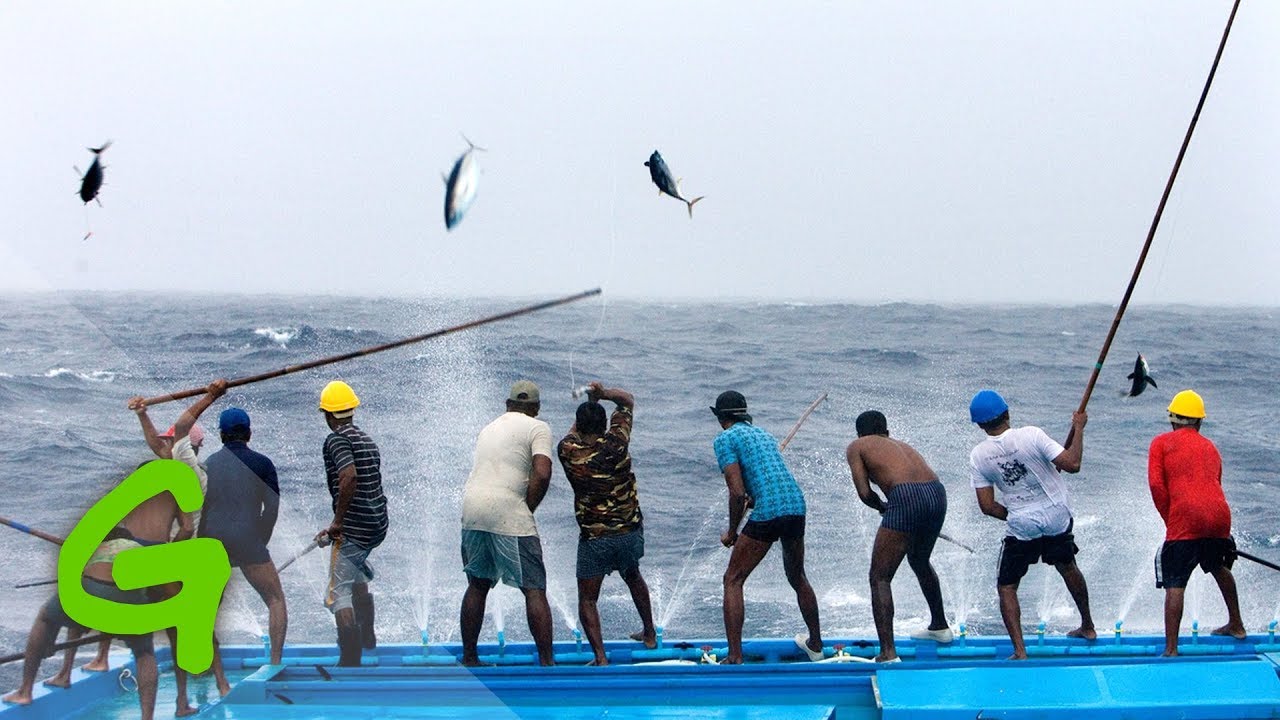
President Dr. Mohamed Muizzu has reaffirmed his administration’s strong commitment to revitalising the fishing sector, announcing that key projects launched to support fishermen will be completed within the next two years, with tangible benefits becoming visible soon.
Speaking on the fourth episode of the Rayyithunnaa Eku podcast, President Muizzu detailed an ambitious lineup of strategic initiatives aimed at strengthening the value chain of fish and fish products. One of the most significant upgrades includes the expansion of skipjack tuna storage capacity, increasing from 9,500 tonnes to 25,000 tonnes. Simultaneously, processing capacity is set to triple, rising from 115 tonnes to 365 tonnes. The President assured that these projects are fully funded and on track, with no anticipated delays.
Highlighting longstanding challenges faced by fishermen—particularly access to affordable fuel and ice—President Muizzu said major infrastructure upgrades are underway to address these issues. By the end of the year, every atoll will host designated islands offering fuel at State Trading Organisation (STO) rates, improving both accessibility and affordability. Construction is also progressing on ice plants, cold storage units, and fish processing centres across various islands.
President Muizzu underscored the importance of Refrigerated Sea Water (RSW) systems to modernize the sector and revealed that loan schemes are being made available to encourage their adoption.
As part of broader financial reforms for the sector, the administration has implemented a 48-hour guaranteed payment policy—a campaign pledge that has already revitalized youth interest in the fishing industry. Since the last Fishermen’s Day, the government has disbursed MVR 470 million in payments to fishermen without disruption, supporting the goal of fully Maldivian-crewed fishing vessels.
A cornerstone of the administration’s financial inclusion strategy is the national fishermen’s registry, which has now recorded 95% of fishing vessels. This database aims to empower fishermen by enabling better access to financial services and recognizing fishing as a viable and sustainable income stream.
In parallel, the government has intensified its focus on maritime safety and resource sustainability. During this term, 18 new Fish Aggregating Devices (FADs) have been installed, and 21 damaged units restored. Additionally, 56 rescue divers have been trained and stationed across an equal number of fishing vessels to improve emergency preparedness at sea.
Looking ahead to capacity building, President Muizzu emphasized the role of education in ensuring the industry’s long-term growth. The Maldives College for Fisheries and Ocean Sciences, under the National University, will continue to offer full scholarships for 45 students pursuing Bachelor’s degrees in Fisheries Management, with additional specialized training planned to enhance skill development across related fields.
President Muizzu concluded by reiterating that these efforts are rooted in direct engagement with the fishing community, ensuring that policies align with real-world needs and contribute to a more sustainable, productive, and empowered fishing industry in the Maldives.