

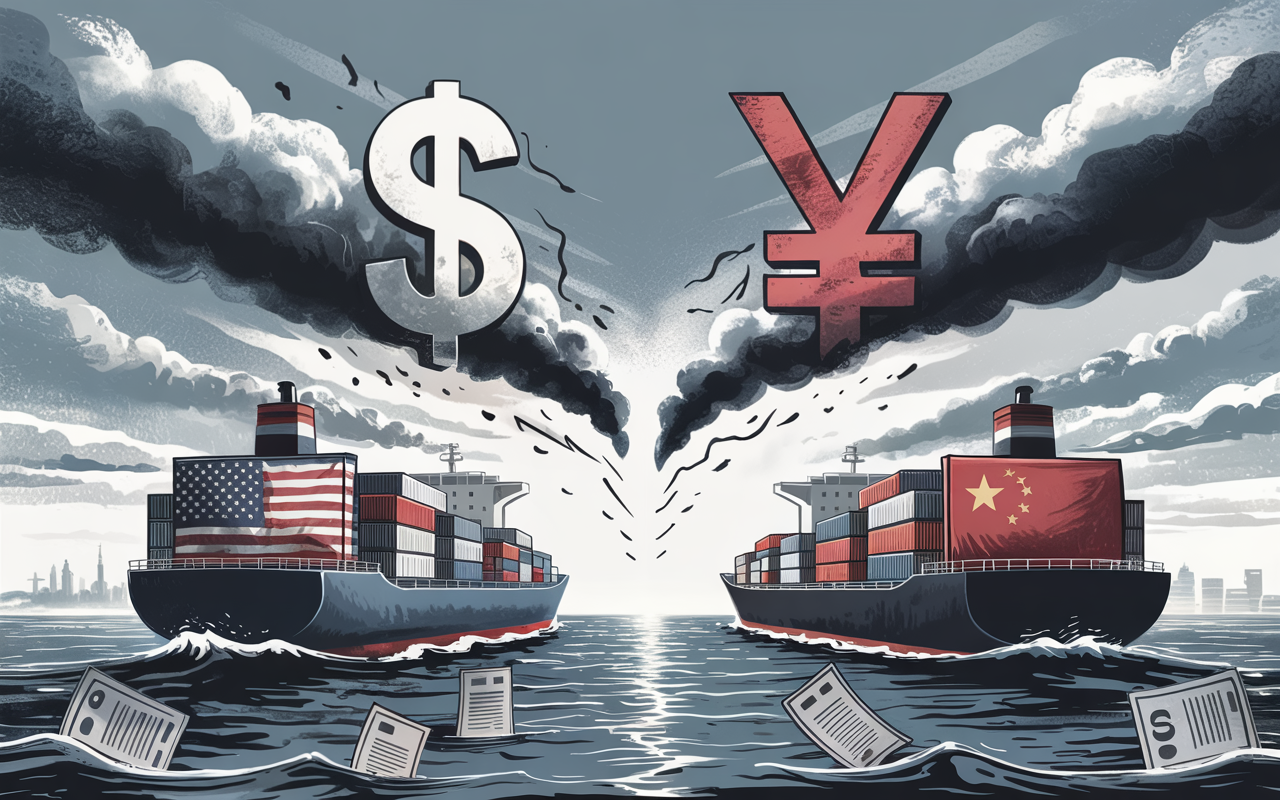
Economic Slowdown and Recession Risks
The Organization for Economic Co-operation and Development (OECD) has reported that ongoing trade conflicts are dampening global economic growth. The OECD downgraded its global growth forecast, citing that increased trade barriers are undermining economic activity and fueling inflation.
In the United States, French central bank chief François Villeroy de Galhau warned that the country risks entering a recession due to the ongoing global trade war. He emphasized that the unpredictability of recent trade measures is a major negative global shock, affecting investment and output.
Supply Chain Disruptions and Increased Consumer Costs
Trade wars have led to significant disruptions in global supply chains. Companies reliant on imported raw materials and components face increased costs due to tariffs, leading to higher production expenses and consumer prices. Industries such as technology, manufacturing, and agriculture are particularly affected, with businesses struggling to find alternative suppliers or facing delays and inefficiencies.
Consumers are experiencing higher prices for goods, as businesses pass on the increased costs resulting from tariffs. This inflationary pressure reduces purchasing power and can lead to decreased consumer spending, further slowing economic growth.
Impact on Employment and Investment
While tariffs aim to protect domestic jobs, trade wars can lead to job losses, especially in export-reliant industries. For instance, American farmers faced significant challenges during the U.S.-China trade war when China imposed tariffs on agricultural products, reducing demand and hurting farm incomes.
The uncertainty created by trade tensions hampers long-term investment decisions. Businesses become hesitant to commit resources amidst volatile trade conditions, leading to decreased capital expenditure and hindering economic expansion.
Strained International Relations and Multilateralism
Trade wars strain diplomatic relations between countries, eroding trust and cooperation. Economic disputes often spill over into broader political disagreements, potentially leading to long-term damage in international partnerships. The United Nations Conference on Trade and Development (UNCTAD) suggests that trade wars are symptomatic of deeper economic malaise, highlighting the need for renewed multilateral cooperation to address global challenges effectively.
The ongoing trade wars are reshaping the global economic order, with far-reaching consequences for growth, employment, consumer prices, and international relations. Addressing these challenges requires a concerted effort to reduce trade barriers, restore multilateral cooperation, and implement policies that promote sustainable and inclusive economic growth.