

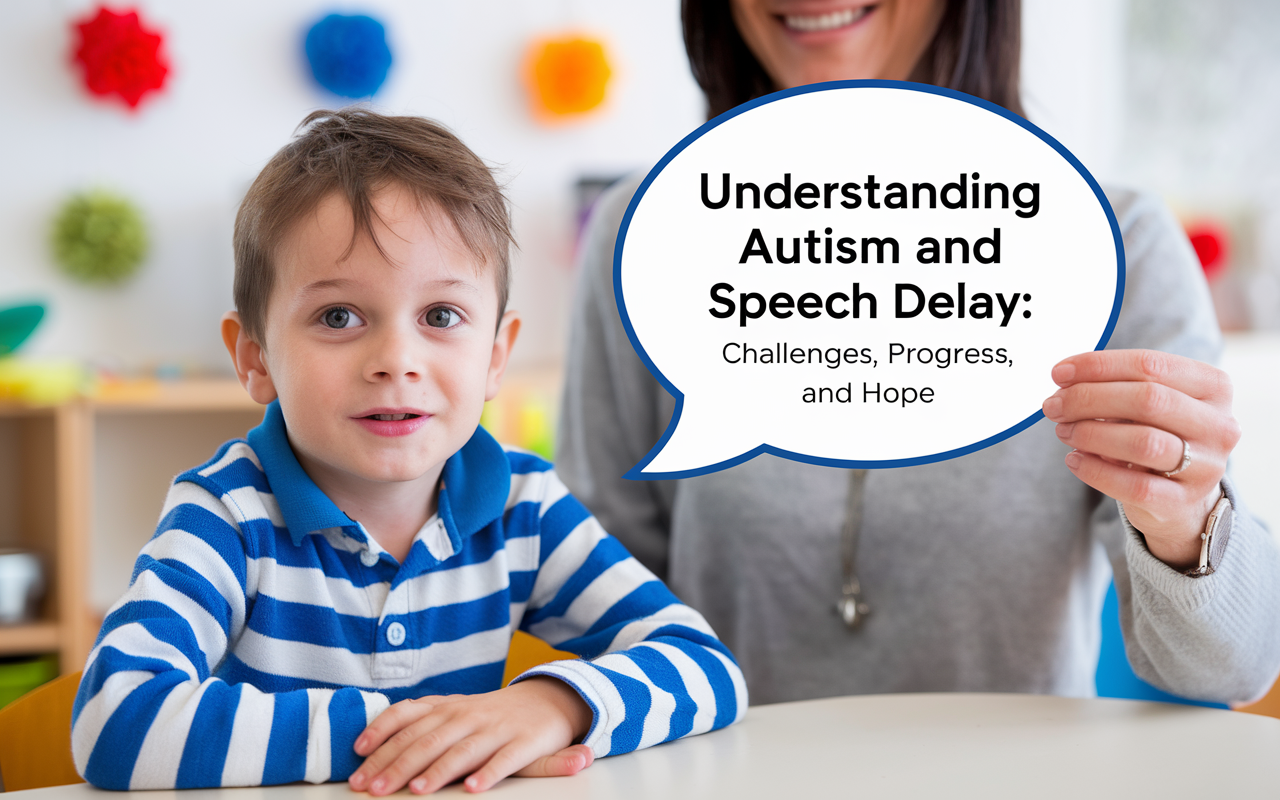
Speech and language development play a crucial role in a child’s ability to communicate, connect with others, and navigate the world. However, for many children on the autism spectrum, speech delay is a significant challenge. Autism Spectrum Disorder (ASD) affects communication in varying degrees, with some children experiencing mild speech delays and others remaining nonverbal for extended periods. Understanding the causes, interventions, and potential outcomes of speech delay in autism is essential for parents, caregivers, and educators.
What Causes Speech Delay in Autism?
Speech development is a complex process involving cognitive, social, and motor skills. In children with autism, speech delay can result from several factors, including:
-
Neurological Differences – Autism affects brain development, particularly in areas responsible for language processing and social interaction. This can lead to difficulties in understanding language, forming words, or using speech meaningfully.
-
Sensory Processing Issues – Many autistic children experience heightened or reduced sensitivity to sensory input, making it challenging to focus on speech and language. They may be more attuned to background noises or struggle with auditory processing, which affects their ability to interpret spoken words.
-
Social Communication Challenges – Speech is not just about words; it also involves gestures, eye contact, and tone of voice. Autistic children may struggle with these social cues, impacting their motivation or ability to engage in verbal communication.
-
Motor Planning Difficulties (Apraxia of Speech) – Some autistic children have difficulty coordinating the muscles needed for speech. This condition, known as apraxia, can make it hard to form words correctly, even if the child understands language.
Recognizing the Signs of Speech Delay
Speech delay in autism varies widely among children. Some may develop speech but struggle with conversational skills, while others may have a complete absence of spoken language. Common signs include:
- Lack of babbling or minimal vocalization in infancy
- Difficulty making eye contact while communicating
- Limited use of gestures (e.g., pointing, waving)
- Repeating words or phrases without understanding (echolalia)
- Difficulty following simple instructions
- Struggling with back-and-forth conversation
Early recognition of these signs allows for timely intervention, which can significantly improve a child’s ability to communicate.
Intervention and Therapy Options
Speech delay in autism is not a fixed condition. With the right support, many children make remarkable progress. Effective interventions include:
-
Speech Therapy – Speech-language pathologists (SLPs) use specialized techniques to help autistic children develop verbal and nonverbal communication skills. Therapy often includes:
- Picture exchange communication systems (PECS)
- Augmentative and alternative communication (AAC) devices
- Interactive play-based speech exercises
-
Applied Behavior Analysis (ABA) – ABA therapy focuses on reinforcing positive communication behaviors, teaching children how to use words functionally, and reducing frustration-driven behaviors.
-
Occupational Therapy – Since sensory processing issues can impact speech, occupational therapy helps children regulate their responses to sensory input, making communication easier.
-
Music and Play Therapy – Many children respond well to music and play-based learning, which can encourage speech development in a relaxed and engaging environment.
-
Parental Involvement – Parents play a crucial role in language development. Simple activities like reading, singing, and encouraging conversation during daily routines can boost a child’s speech progress.
Can Nonverbal Autistic Children Learn to Speak?
One of the biggest concerns for parents is whether their nonverbal autistic child will eventually develop speech. While every child is different, research shows that many nonverbal children do learn to communicate over time, either verbally or through alternative methods. Early intervention, patience, and consistent support are key factors in helping children find their voice.
Embracing All Forms of Communication
For some autistic individuals, spoken language may always be limited, but communication extends beyond speech. Many children thrive using sign language, picture-based communication, or speech-generating devices. The goal is to ensure they can express their thoughts, needs, and emotions in a way that works for them.
Every Child’s Journey is Unique
Autism-related speech delay presents challenges, but it also opens doors to different ways of understanding and interacting with the world. With the right interventions, unwavering support, and a focus on the child’s strengths, communication can flourish in various forms. Whether through words, gestures, or technology, every child deserves a voice—and the opportunity to be heard.