

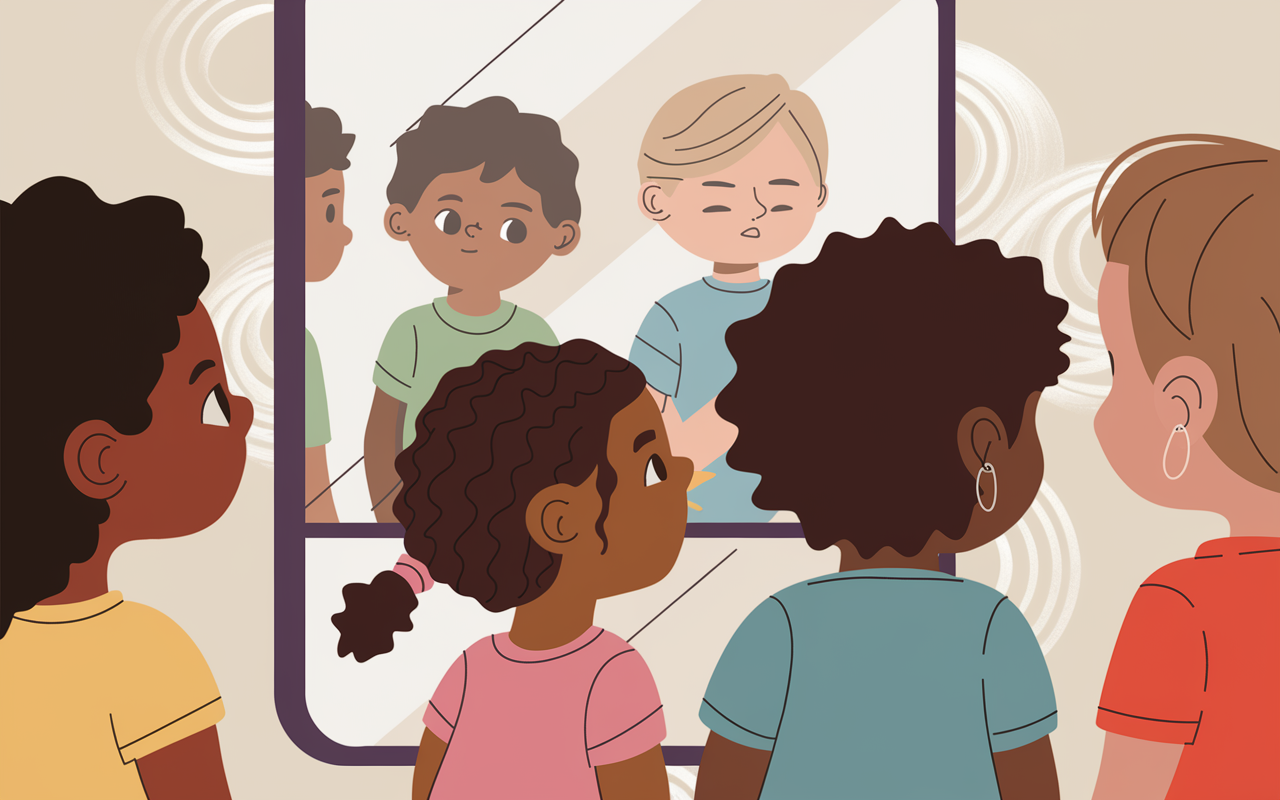
Our perception of what is considered a “normal” body shape is shaped by the range of bodies we see around us. While previous studies have shown that adults adjust their understanding of body weight based on visual exposure, new research published in ScienceDirect confirms that this process is already adult-like in children as young as seven years old.
How Our Brains Adapt to Body Size
This process, known as adaptation, occurs when the brain adjusts its perceptions in response to repeated exposure to certain visual stimuli. Similar studies on facial perception have shown that both children and adults update their mental models of what a typical face looks like based on the faces they encounter. Now, researchers have applied this concept to body perception, examining how children, adolescents, and adults perceive body weight after viewing images of varying body sizes.
Study Findings: Children Perceive Body Size Like Adults
In the study, participants—including children aged seven to 15 and adult university students—were asked to rate the heaviness of a series of body images. They were then exposed to either 20 very thin or 20 very heavy figures before rating the original images again.
The results showed a significant shift in perception: after viewing heavier bodies, participants—regardless of age—rated the same bodies as lighter than before. This suggests that their mental model of a “normal” body had adjusted to be heavier. However, those who viewed thinner bodies did not show the same change in perception.
Interestingly, when comparing the youngest participants (seven-year-olds) with adults, researchers found that the effect was just as strong in children as it was in adults. This indicates that by age seven, the brain’s ability to adapt body size perception functions in the same way as it does in adulthood.

Implications for Body Image in Children
This study adds to existing concerns about the impact of visual media on body image. Previous research has shown that young girls who play with ultra-thin dolls develop a preference for thinner bodies. However, this new study suggests that the effect isn’t just about aspiration—mere visual exposure to different body types can influence body perception.
These findings reinforce the idea that exposure to a variety of body sizes in toys, media, and everyday life is crucial in shaping a healthy body image. It also highlights that the same concerns about media influence on adult body ideals—such as exposure to thin models leading to a preference for slimness—also apply to children.
The Need for Balanced Representation
Western cultural influences have already led young children to associate larger bodies with negative traits, such as being less attractive or desirable as a friend. Given that children’s perceptions of body size are already flexible at a young age, there is an urgent need to ensure that media and toys represent a diverse range of body shapes.
By fostering exposure to varied body types early on, society can help reduce harmful body image biases and prevent the development of unhealthy thin ideals in adulthood.