



The State Trading Organization (STO), the Maldives’ largest listed state-owned enterprise, on 22 April 2206 published a first-quarter scorecard that immediately re-set the baseline for what a “good quarter” looks like for the company.
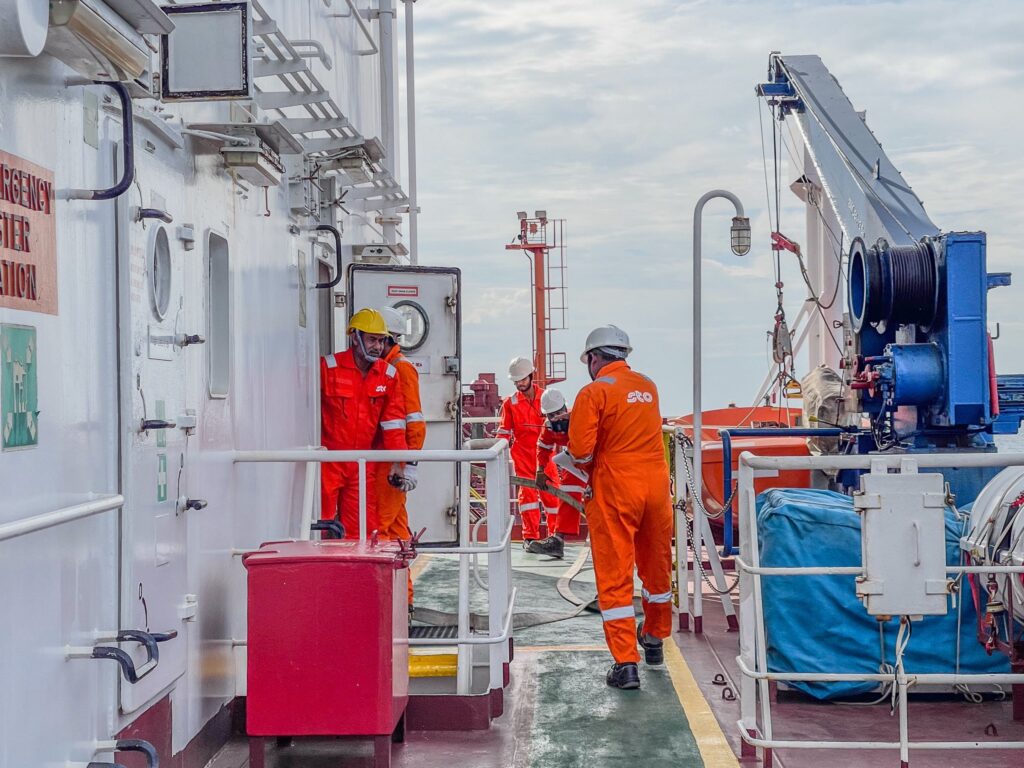
Metric (Q1 2026)
- Total Revenue: MVR 5.5 billion | +33% QoQ
- Gross Profit: MVR 785 million | +17% QoQ
- Operating Profit: MVR 368 million | +14% QoQ
- Net Profit Before Tax: MVR 331 million | +20% QoQ
- Net Profit After Tax: MVR 276 million | +13% QoQ
The revenue print is the highest single-quarter top-line in STO’s 62-year history, eclipsing the MVR 4.9 billion peak recorded during the 2022 oil shock. Management attributed the jump to three forces working in the same direction: (1) surging global crude prices driven by the escalating US-Israel war against Iran, (2) a 27% YoY rise in fuel sales volumes, including bunkering, and (3) broad-based gains across construction materials, pharmaceuticals, home appliances, and supermarket retail.

Q1 Performance 2018 – 2026: The Long View
To understand why this quarter matters, it needs to be placed in a seven-year arc.
- Q1 2018: MVR 2.00 billion revenue | MVR 93 million operating profit | MVR 47.3 million net profit after tax
- Q1 2020: MVR 1.8 – 1.9 billion (estimated) revenue | MVR 80 – 100 million (estimated) operating profit | COVID-19 onset; Maldives GDP 5% YoY
- Q1 2021: MVR 1.80 billion revenue | MVR 60 – 90 million (estimated) net profit after tax | Border reopening, tourism recovery
- Q1 2022: MVR 4.04 billion revenue | MVR 209 million operating profit | MVR 150 million net profit after tax | Russia-Ukraine oil shock; +20.4% QoQ
- Q1 2023: MVR 4.40 billion revenue | MVR 503 million operating profit | MVR 368 million net profit after tax | Peak margins on fuel
- Q1 2024: MVR 3.98 billion (estimated) revenue | MVR 308 million operating profit | MVR 195 million net profit after tax | Oil price normalization
- Q1 2025: MVR 4.02 billion revenue | MVR 263 million operating profit | MVR 169 million net profit after tax | Margin compression; rising opex
- Q1 2026: MVR 5.50 billion revenue | MVR 368 million operating profit | MVR 276 million net profit after tax | Middle East war + 27% fuel volume surge
-

During a previously held Annual General Meeting of STO: the company has continued to scale up its annual revenue consistently in the past four years | Photo: STO
Key read-throughs:
- Revenue has tripled in four years (Q1 2022 vs. Q1 2018) and nearly tripled again vs. Q1 2021: STO has decisively transitioned from a ~MVR 2 B/quarter company into a ~MVR 5/B quarter company.
- The only year STO’s Q1 net profit dipped was 2025, when global oil prices stabilized and operating costs caught up: a textbook margin-compression quarter
- Q1 2026 reclaims the margin narrative: Net profit is up 63% YoY versus Q1 2025 and is the second-highest Q1 net profit on record, behind only the exceptional Q1 2023 print of MVR 368 million
- Operating leverage is improving: In Q1 2023, it took MVR 4.4 billion of revenue to produce MVR 368 million of operating profit (~8.4% margin). In Q1 2026, MVR 5.5 billion produced the same MVR 368 million; a 6.7% operating margin. Lower, but spread across a much wider volume base, indicating STO is trading margin for scale and market share.
Why STO Remains Profitable: Structurally
STO’s profit durability is not a cyclical accident. It is engineered into the corporate architecture:

A near-monopoly on the most inelastic product in the economy – fuel:
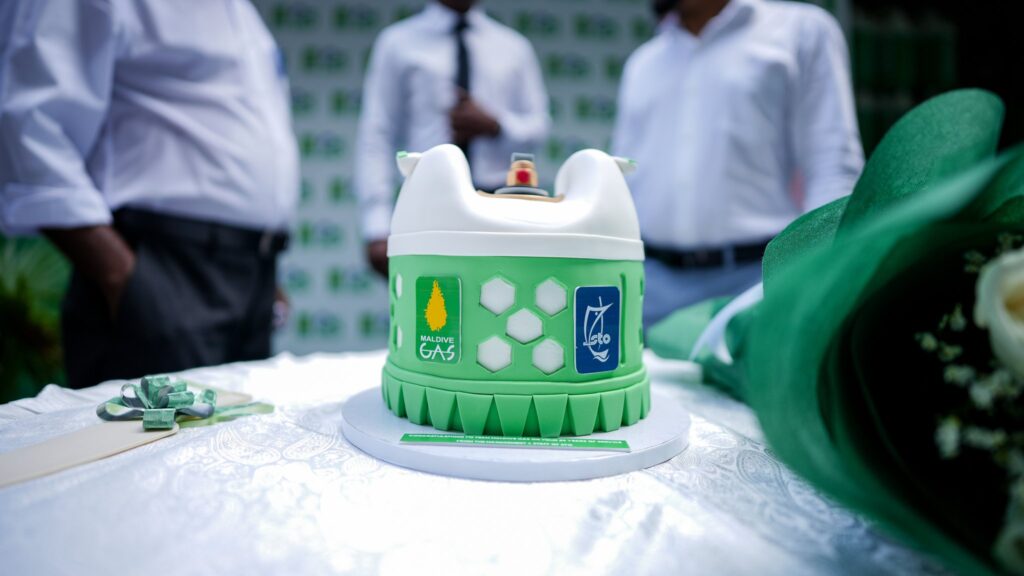
Through its subsidiaries Fuel Supplies Maldives (FSM), Maldive Gas, and Maldives National Oil Company (MNOC), STO is the dominant supplier of petrol, diesel, LPG, and bunkering fuel to the entire archipelago: 1,200 inhabited and resort islands that run almost entirely on imported hydrocarbons. Tourism, fisheries, shipping, and domestic transport cannot function without STO’s fuel. Demand is therefore price-inelastic, and STO holds the pricing pen.
Diversification across non-correlated essentials:
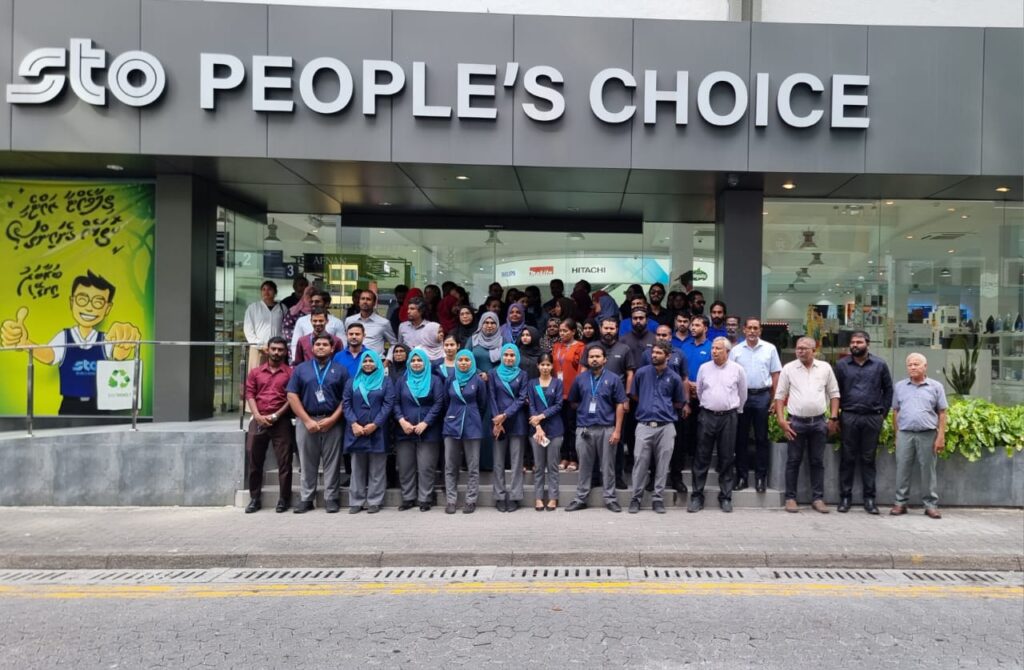
The group spans seven structurally defensive verticals – petroleum, LPG, cement (Raysut Maldives Cement), roofing (MSP), pharmaceuticals and medical gas, supermarket staples (People’s Choice), insurance (Allied), and shipping (Maldives State Shipping). When tourism collapsed in 2020, staple food, pharma, and construction cement kept revenues ticking. When oil spiked in 2022, fuel compensated for softness elsewhere.
Government majority ownership (81.63%) – a pricing backstop:
STO’s ability to defer price pass-throughs during global spikes (as it did in early 2022 when it held domestic fuel rates steady despite rising import costs) is possible because the majority shareholder, the Maldives government, can absorb shareholder-level pressure in exchange for macroeconomic stability. This paradoxically protects long-term profitability by guaranteeing that STO never loses its social license to operate.
Hard-currency bunkering and re-export revenue:
Bunkering – refueling foreign vessels transiting the Indian Ocean, generates USD receipts. In an economy chronically short of dollars, this is a structural margin lever. The 27% volume increase disclosed in Q1 2026 is heavily driven by bunkering, the highest-dollar-yield segment in the fuel book.
Scale economics in procurement:
With over 4,000 employees and MVR 8+ billion in total assets, STO buys at container-ship scale. No private Maldivian importer can match its landed cost on cement, rice, flour, medicine, or refined products.
How STO Survived and Profited Through Two Global Crises
Crisis 1: COVID-19 (2020 – 2021)
The Maldivian economy contracted by an estimated -33% in 2020, with Q2 GDP collapsing -51.6% YoY as borders closed. Yet STO closed 2020 with a net profit of MVR 127 million and revenue of MVR 8.5 billion.
Why it worked:
- Essential-goods classification meant STO’s supermarkets, pharmacies, and fuel terminals never fully shut down
- Pharma and medical-gas demand spiked precisely because of COVID: Maldive Gas’s medical-oxygen business and STO Medical Services (the main pharma distributor for IGMH and regional hospitals) had a windfall
- Construction did not stop. Government stimulus kept cement and roofing volumes elevated through Raysut Maldives Cement and MSP
- Dividend discipline maintained. STO still paid MVR 60/share in 2020 and MVR 65/share in 2021: a signal to the market that cash generation never broke.
The lesson: in the Maldives, a diversified essentials distributor is counter-cyclical to tourism.
Crisis 2: The US-Israel War Against Iran (2025 – 2026)
The ongoing conflict has done the opposite of COVID, it has inflated the one commodity STO dominates. Brent crude has been trading above USD 100/barrel, and the Maldives government has already flagged that the Middle East conflict “may delay infrastructure projects”.
Why STO’s Q 2026 Margin is sustainable through this war:
- Price + volume are rising simultaneously: a rare combination. The 33% revenue jump is roughly half from higher MVR-denominated fuel prices and half from the 27% volume increase (bunkering, fisheries, resort-generators).
- Financing-cost discipline: Management specifically cited “effective management and reduction of financing costs” as the driver of the 20% jump in pre-tax profit, i.e. STO is refinancing/repaying dollar-denominated debt into a favourable rate environment before rates move further. This is structural, not a one-off.
- Bunkering tailwind: Rerouted shipping through the Indian Ocean (Red Sea avoidance) increases calls at Maldivian bunkering facilities, a direct geopolitical beneficiary dynamic.
- Domestic price-stability buffer: STO has once again held consumer fuel prices below full cost pass-through, preserving political capital for the next shock while still expanding margin on wholesale, bunkering, and industrial contracts where prices move freely.
- Cement and construction repricing: Raysut Maldives Cement benefits from higher global cement prices even as domestic demand remains supported by government housing and reclamation project (Rasmalé, etc.).
The single risk to monitor: if crude collapses below USD 70/bbl on a Middle East ceasefire, STO will face a repeat of the Q1 2025 margin-compression episode. But given its proven 2025 floor of MVR 169 million net profit even under that scenario, the downside is bounded.
The Bottom Line
Q1 2026 is not a lucky quarter, it is the logical outcome of a six-year operating model that has now been stress-tested against two opposite-direction global shocks and emerged profitable in both. STO has compounded revenue at roughly 25% CAGR since Q1 2018 and has not reported a loss-making quarter in any of the disclosed periods.
For investors on the Maldives Stock Exchange (MSE: STO), the thesis is simple: as long as the Maldives imports fuel, food, medicine, and cement and as long as the government retains its 81.63% stake, STO is, in effect, a leveraged long position on Maldivian economic activity itself, with a built-in hedge against oil-price regimes in both directions.