

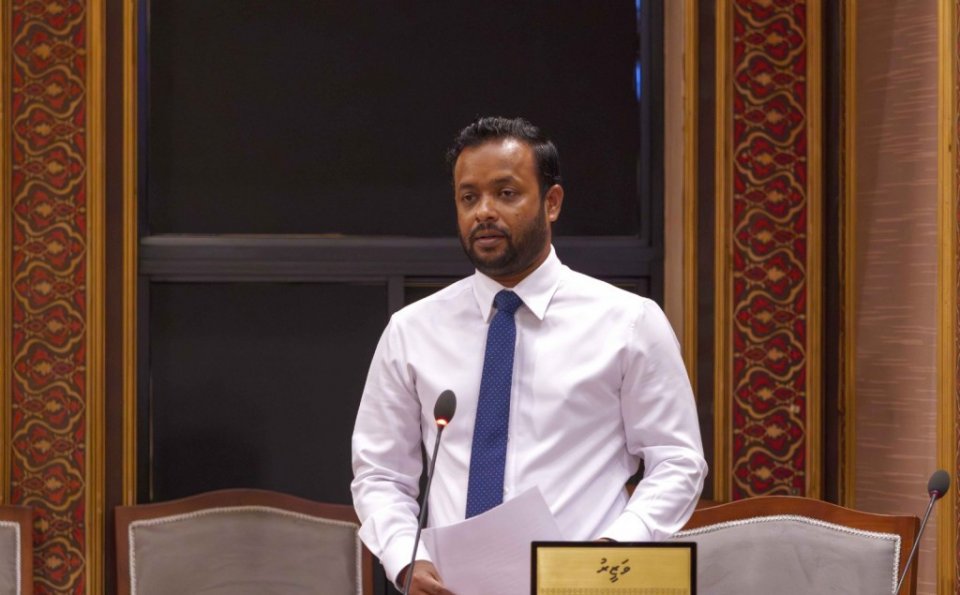

The Minister of Construction, Housing and Urban Development, Dr. Abdulla Muththalib, has confirmed that the exact start date for physical works on the Chinese-funded Malé road development project remains undecided. He delivered the update during a parliamentary session on Monday.
Moreover, he stressed that the groundwork is moving forward steadily despite the lack of a firm timeline.
North-Galolhu MP Mohamed Ibrahim raised the question on the floor. In response, Dr. Muththalib confirmed that feasibility studies have already wrapped up. Furthermore, the ministry has selected the survey and design teams.
Survey Teams Arrive Within the Month
The minister noted that the survey and design teams will land in the Maldives within the current month. They will begin work immediately on arrival. Once they finalize the design phase, the project moves into the Chinese tendering stage to select a contractor. Physical construction will only kick off after the contractor signs on.
Dr. Muththalib reiterated that the entire initiative runs as a grant-aid project from the Chinese government. President Dr. Mohamed Muizzu first announced this funding arrangement during his state visit to China in January 2024. At the time, the President confirmed that a substantial portion of the USD 130 million Chinese grant would flow into the Malé road development project.
“The project is progressing under Chinese grant assistance, in line with the President’s announcement. It will proceed according to the framework established by the Chinese government,” the minister said.
“We are currently in the paperwork phase; therefore, we cannot specify an exact date for the commencement of physical works,” he added.
The government still aims to launch construction within 2025 and complete the works over a four-year window.
What the Malé Road Development Project Will Deliver
The project tackles one of the capital’s most chronic problems: flooding. Crews will asphalt several roads, install underground cabling, and upgrade the wider road network to modern standards. Consequently, the redesign promises a step-change for daily commutes and storm resilience.
A Capital Built on Patchwork Roads
Malé’s road network has long buckled under the weight of unplanned, piecemeal interventions. Many streets still rely on interlocking concrete bricks laid decades ago. These bricks shift constantly. Sanitation crews, water utility teams, and cabling contractors lift and relay them whenever underground work demands access. However, the releveling that follows often fall short.
Consequently, surfaces emerge uneven, wobbly, and pitted. Motorcyclists swerve around dislodged blocks. Cars rattle over sunken patches. Pedestrians trip on raised edges. After heavy rain, depressions in the brickwork pool into ankle-depth puddles. The cycle repeats with every fresh utility job.
This patchwork approach also raises a fairness question for vehicle owners. Drivers must renew roadworthiness certificates and stamps year after year, paying fees and meeting strict mechanical standards. Yet the roads themselves remain hazardous, unstable, and arguably unworthy of the vehicles using them. The asymmetry has become a sore point among Malé residents.
Why the New Approach Matters
The Malé road development project signals a sharp departure from the old brick-and-patch model. Asphalt surfaces resist constant lifting. Underground cabling consolidates utility access into planned conduits, reducing the need for repeated road excavation. Modernized drainage tackles the flooding that paralyzes the capital during the southwest monsoon.
In short, the Malé road development project aims to break the cycle of dig-relay-repeat that has defined the city’s roads for a generation. Residents, businesses, and vehicle owners alike stand to benefit if delivery matches the ambition.
For now, the ministry holds the line: paperwork first, shovels laters. Dr. Muththalib insists the work is moving as fast as the Chinese grant framework allows.