


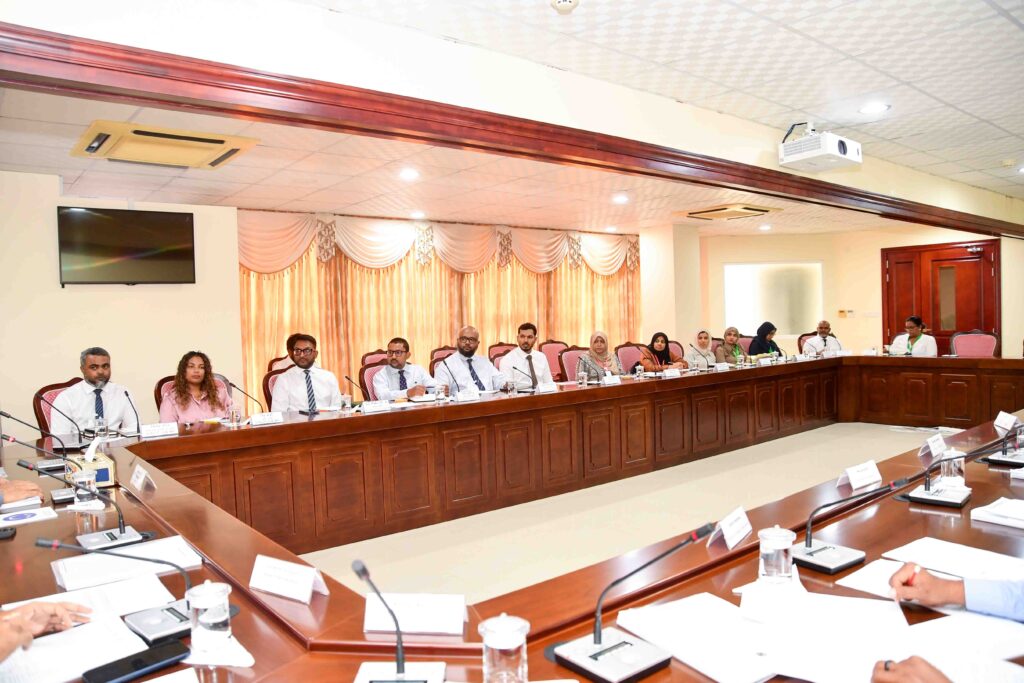
The 20th People’s Majlis Committee on State-Owned Enterprises drilled into the Maldives medicine shortage crisis on May 5, 2026, summoning the chief executive of State Pharma, the State Trading Organization (STO), Aasandha Company, and the National Social Protection Agency (NSPA) to a single hearing.
The committee chair framed the session as a national-interest probe into why basic medicines have grown harder to obtain across the country. Moreover, the testimony exposed a tangled web of regulatory, logistical, and financial fault lines that no single agency currently owns end-to-end.
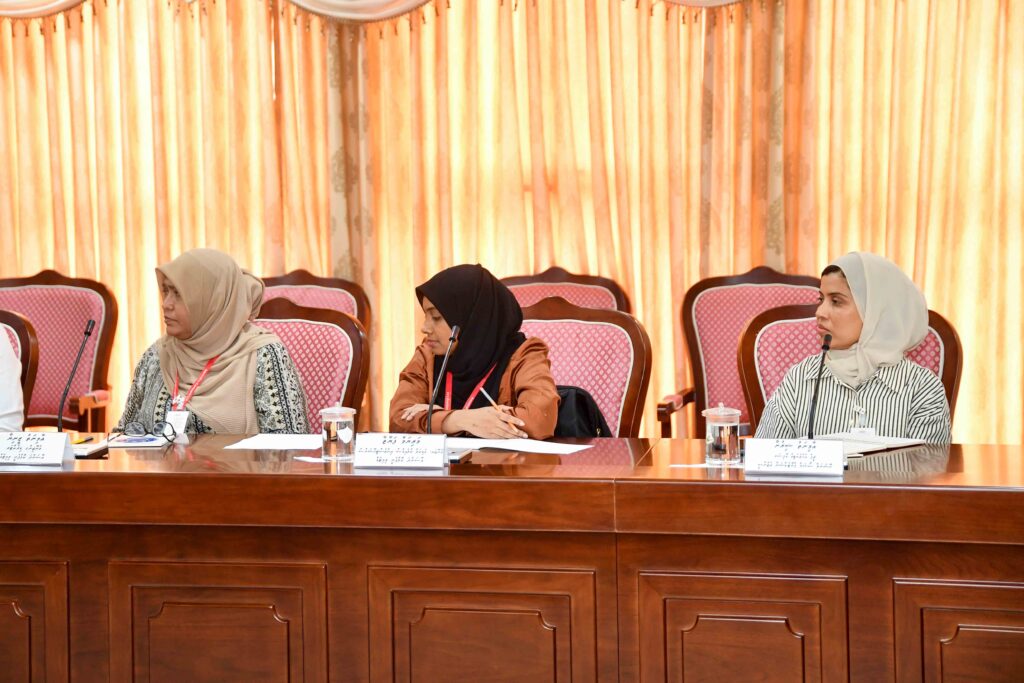
The main takeaway: from July 1, State Pharma — formally the State Pharmaceutical and Medical Supply Corporation — assumes full control of pharmaceutical and consumables management nationwide. The transition will rewire how medicine flows into and across the Maldives. However, the officials who appeared before the committee conceded that the underlying structural issues will take an additional six months from that handover date before they ease meaningfully.
A Crisis the Government Now Concedes Is National
State Pharma Managing Director Dr. Shah Abdulla Mahir opened with a direct admission. The core problem, he said, is that no national authority currently has visibility into the country’s pharmaceutical stock. Imports get logged inconsistently at customs — sometimes as generic commodities rather than specific drugs. Consequently, neither regulators nor procurement agencies can quantify what enters the country, what sits on shelves, or what runs short.

Aasandha Managing Director Aminath Zeeniya backed the diagnosis. Approximately 60% of Aasandha’s scheme expenditure goes to pharmacy reimbursements. Yet despite that scale of public spending complaints of stock-outs continue to land at the company’s call centre daily. The Maldives’ Approved Drug List (ADL), maintained by the Maldives Food and Drug Authority (MFDA), nominally covers around 5,000 medicines. However, an STO review revealed that only roughly 1,300 are actually registered and reliably available. The gap between what is permitted and what is present has widened sharply.
Dr. Shah did not soften the diagnosis: “This is not just a Maldives problem; it is a global issue. But because of the lack of streamlined systems and existing monopolies, it has become a political one here.”
Brick-and-Patch Pharmacy Network: 381 Empanelled Pharmacies, 70% Private
Zeeniya corrected an earlier figure during questioning: Aasandha currently has 381 empanelled pharmacies on its network. Furthermore, 70% of pharmaceutical dealerships sit with the private sector, with STO controlling only the remaining 30%. That asymmetry has shaped — and arguably distorted — pricing dynamics for years.

Aasandha said its previous price audit, conducted around two years ago, identified pharmacies apply profit margins of 500 to 600%. Bulk procurement was floated as the corrective lever. Yet only a fraction of the targeted basket has been onboarded so far. Importers have repeatedly told Aasandha that they cannot match the scheme’s mandated rates because of high acquisition costs. Consequently, some sidestep the scheme entirely and sell direct to patients at higher market rates.
The Visibility Gap That Doctors Cannot Close
A recurring committee theme zeroed in on prescription practices. Doctors at publc facilities, including Indira Gandhi Memorial Hospital (IGMH), currently write prescriptions without live visibility into pharmacy stock. STO’s central office can see live stock at its outlets. However, that data does not flow to clinicians, hospitals, or the public. By contrast, private operators such as Tree Top Hospital reportedly equip their doctors with real-time stock dashboards.
The mismatch creates a daily friction loop. Patients leave consultations clutching prescriptions for medicines that are not on the shelf. Then they trail between pharmacies, call centres, and online portals chasing alternatives. On MP described his own experience attempting to fill a prescription at IGMH and ending up at an STO branch three hours later, only to be told the medicine had to be ordered. Another MP flagged the absurdity that critical respiratory and ICU drugs — including Symbicort and Vyvanse-type medicines — appear and disappear from the market without warning.
State Pharma plans to plug the gap through a public-facing portal that will let citizens check which pharmacies stock specific medicines. Furthermore, integration with Aasandha’s system will eventually allow doctors to prescribe against live availability data. The integration is targeted for phased rollout following the July takeover.
A Tragic Case Looms Over the Hearing
A Thoddoo MP raised the death of a seve-year-old child whose family had spent more than eight months pleading for a feeding tube that was unavailable locally. The MP demanded a guarantee that no similar incident would recur.
Dr. Shah’s response carried the weight of the moment: “Healthcare is incomplete without medicine. Obtaining a feeding tube or basic medical device should never require a prescription-based struggle.”
He added that consumables — the category to which the feeding tube belongs — will fall fully under State Pharma’s mandate from July 1. However, he stressed that hospitals performing surgeries must take responsibility for ensuring the immediate availability of post-operative consumables, and not push that burden onto bereaved families.
Bulk Procurement: Phase 2 Kicks Off Under State Pharma
The committee pressed officials on bulk procurement, the cost-control tool floated by the previous administration and pursued in collaboration with the United Nations Development Programme (UNDP). The witnesses presented two figures during the hearing — 54 medicines under the active rollout, and 250 line items issued through Aasandha under the pilot — reflecting different counting bases. Phase 2 of the programme, which had been led jointly by Aasandha, STO, UNDP, and the Ministry of Finance, will pass to State Pharma from July 1. The corporation will then expand the basket for medicines covered.
In addition, Aasandha confirmed that no Maximum Retail Price (MRP) currently apply at a national level. The lack of an MRP regime has constrained pricing oversight, given that wholesale rates remains uncontrolled. State Pharma’s longer-term ambition is to harmonise pricing across the import-to-pharmacy chain.
Forex, Cargo, and the Practical Squeeze
Beyond regulation, witnesses flagged the operational squeeze tightening on the entire pharmaceutical supply chain. Suppliers demand upfront USD payments. Yet the Maldives is currently navigating a foreign exchange shortage, with tourism momentum softening and oil prices trending higher. STO’s representatives confirmed that even the country’s largest state importer has struggled to secure dollar liquidity for advance payments.
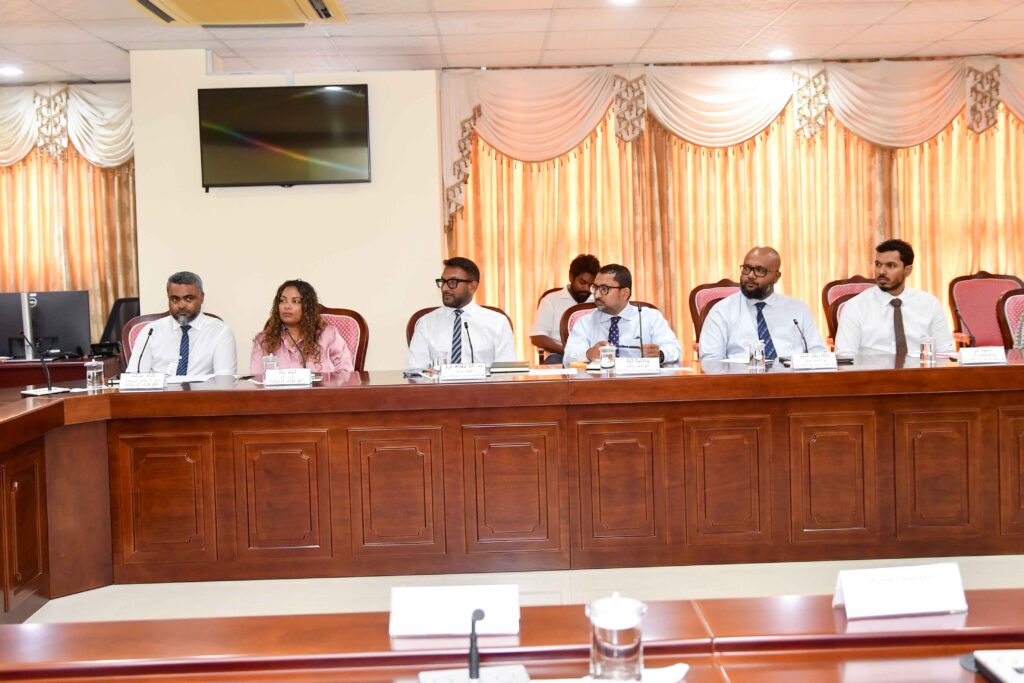
Air cargo capacity has emerged as a second constraint. Pharmaceuticals require air freight, and regional capacity has been tight for months. Therefore, even when orders clear financially, physical delivery often slips. The MP from Dhiggaru pressed the panel on whether private players could realistically outperform STO on the same constraint, given that STO holds the country’s strongest forex access. The witnesses conceded that challenge but argued that a single, focused agency — State Pharma — would handle it more efficiently than the current fragmented setup.
The Brand Question and Doctor Incentives
The committee raised an uncomfortable allegation: that some doctors prescribe specific brands because they receive commissions from importers or pharmacies. Aasandha’s MD said the scheme’s portal now defaults to generic prescribing. Doctors must manually type a brand name to override the generic option, leaving an audit trail. Furthermore, Aasnadha has built out a Medical Fraud Investigation unit to scan invoices for irregularities. The agency reports that the volume of identified fraud has fallen sharply since the controls came online.
Dr. Shah pushed the broader cultural argument. Generic-name prescribing aligns with international best practice. Patient comfort with familiar brands often drives unnecessary import requests for foreign-branded equivalents. As a result, the system absorbs friction than better quality-assurance frameworks could eliminate.
Aasandha’s Foreign Hospital Network: Two Restored, Three Still Suspended
Zeeniya confirmed that five overseas hospitals had at one point halted credit-based services for Aasandha-covered Maldivian patients over unpaid bills. Aasandha has since renegotiated rates and resumed services at two of the major facilities. Talks continue on the remaining three. Payments to providers, both local and overseas, are being made more regularly than before, she said. Air ambulance utilisation has surged in parallel — and so have its costs, since patients invariably select air ambulance over scheduled flights.
The Six-Month Stabilisation Timeline
When pressed for a deadline, Dr. Shah set out a six-month horizon from the July takeover. State Pharma will use that window to build live stock visibility, integrate procurement systems, harmonise the public and private supply chains, and align with prescribing doctors. An expedited interim sourcing channels is already operating to plug acute shortages. The agency’s call centre on 1505 — operating 24/7 — currently handles foreign medicine requests, with a two-week target four sourcing most items.
The roadmap depends on collaboration. Pharmaceutical regulations have been amended to remove import monopolies, opening the field to a wider pool of importers. STO will retain biomedical engineering, large-equipment imports, and existing legacy agreements with major pharmaceutical brands as a second-phase transition area. Therefore, the July handover marks a beginning rather than a clean break.
What This Means for the Sector
The Maldives medicine shortage crisis testimony lays out the sharpest official acknowledgement yet that the country’s pharmaceutical architecture needs structural reconstruction. State Pharma’s takeover consolidates fragmented authority into a single corporate vehicle. Furthermore, the policy shift from sale-by-individual-prescription to system-level procurement, generic prescribing, and integrated stock visibility positions the sector for a different operating model.
For private pharmacies, the implications are sharp. Aasandha’s board has approved measures targeting empanelled pharmacies that fail to dispense covered medicines. De-empanelment is now on the table. Furthermore, mandatory live stock-data sharing is set to follow, finally activating a regulation that has been gazetted but unenforced.
For patients, the immediate experience is unlikely to shift overnight. The committee chair noted that the Maldives medicine shortage crisis has festered across multiple administrations and now overlaps with broader macro headwinds. The interim period — between July 2026 and roughly January 2027 — will test whether State Pharma can deliver on its mandate while the country’s forex strain, cargo bottlenecks, and brand-loyalty patterns continue to push back.
For now, the committee will move to written follow-up. Several MPs flagged that they would submit detailed written questions to each agency, signaling that parliamentary oversight on the Maldives medicine shortage crisis is far from over.