


President Dr. Mohamed Muizzu says the Maldives medicine shortage solution will arrive by June or July 2026. He made the announcement during the national media programme “Nation Chat”. The President said State Pharma: formally the State Pharmaceutical and Medical Supply Corporation Limited, is already driving progress on the ground.
State Pharma Takes Full Control from July 1
State Pharma will assume fully control of pharmaceutical and medical consumables procurement nationwide from July 1, 2026. The transition rewires how medicine flows into and across the Maldives.
The President noted that State Pharma gives priority to two areas: medications for chronic illnesses, and drugs that are currently unavailable in the country.
“With the grace of Allah, the ongoing work is progressing well. Our primary focus is to address the concerns of those requiring long-term medication and to overcome the difficulties in procuring medicines that are not easily accessible in the country. This also involves necessary collaboration with the private sector. Within this established process, we expect the situation to improve significantly by mid-year, specifically around June or July,” President Muizzu said.
What State Pharma Has Already Done
The government established State Pharma in September 2024. Its mandate covers bulk procurement and importation of pharmaceuticals, medical consumables, and equipment, and their distribution across the Maldives.
The corporation has already opened its first pharmacy, the State Pharma IGMH Pharmacy, at Indira Gandhi Memorial Hospital (IGMH). It also runs a 24-hour hotline on 1505 to help the public locate essential medicines. An expedited interim sourcing channel is already operating to plug acute shortages, with a two-week target for sourcing most items through the 1505 call centre. The corporation is also developing an online portal to monitor medicine availability nationwide.
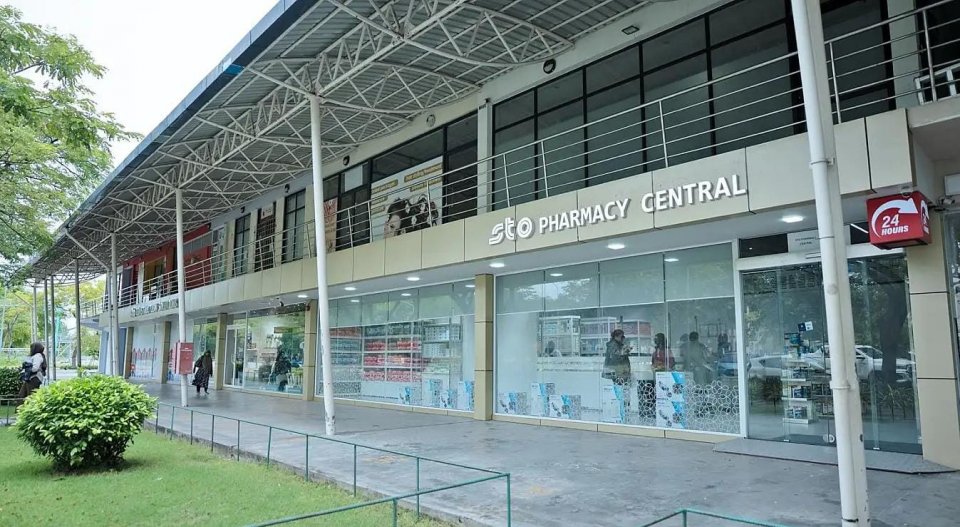
Managing Director Dr. Shah Abdulla Mahir has confirmed that all pharmacies and medical consumable operations under STO will transition to State Pharma by mid-year. Integration of Aasandha, the national social health insurance scheme, forms the second phase of this transition.
Medicine Variety More than Quadruples
Pharmaceutical imports have expanded sharply. Previously, STO imported approximately 200 varieties of medicine. That figure has now risen to between 800 and 900 varieties. The country’s Approved Drug List is also set to expand as the supply situation stabilizes.
Pharmaceutical regulations have been amended to remove import monopolies, opening the field to a wider pool of importers. STO will retain biomedical engineering, large-equipment imports, and existing legacy agreements with major pharmaceutical brands as a second-phase transition area.
Parliamentary Scrutiny Intensifies
The 20th People’s Majlis Committee on State-Owned Enterprises summoned the chief executive of State Pharma, STO, Aasandha Company, and the National Social Protection Agency (NSPA) to a single hearing on May 5, 2026. The committee framed the session as a national-interest probe into why basic medicines have grown harder to obtain across the country.
Dr. Shah told the committee that the core problem is that no national authority currently has visibility into the country’s pharmaceutical stock. Imports get logged inconsistently at customs, sometimes as generic commodities rather than specific drugs. Neither regulators nor procurement agencies can quantify what enters the country, what sits on shelves, or what runs short.
Dr. Shah did not soften the assessment: “This is not just a Maldives problem; it is a global issue. But because of the lack of streamlined systems and existing monopolies, it has become a political one here.”
Six-Month Stabilization Window
When pressed for a deadline at the committee hearing, Dr. Shah set out a six-month horizon from the July takeover. State Pharma will use that window to build live stock visibility, integrate procurement systems, harmonize the public and private supply chains, and align with prescribing doctors.