

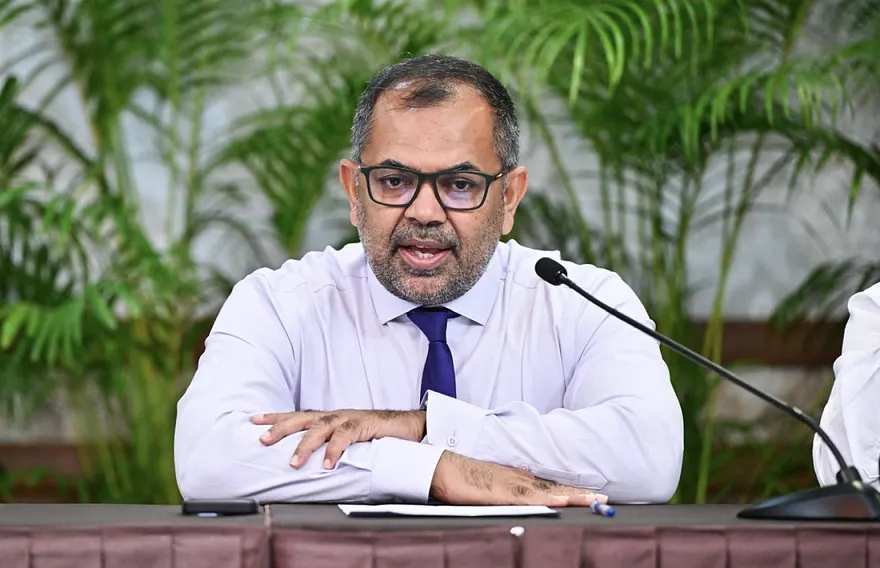

The Maldives is bracing for a significant economic blow as Finance Minister Moosa Zameer revealed that the ongoing Middle East conflict could drain between $85 million and $90 million from the country’s finances within a single month, a stark warning that has prompted the government to reassess its spending priorities and explore additional financing options.
Minister Zameer made the disclosure at a media briefing held by the special ministerial committee formed by President Dr. Mohamed Muizzu specifically to manage the economic and social fallout of the regional conflict on Maldivian citizens.
Non-Negotiable Expenditures in a Tightening Budget
Despite the anticipated revenue shortfall, the Finance Minister was clear that certain spending lines are off the table when it comes to cuts. Healthcare and medical services, he stressed, will be protected regardless of fiscal pressure.
“To sustain these essential services, we may need to adjust project schedules to manage cash flow,” Minister Zameer explained, adding that President Muizzu has directed that housing and healthcare be accorded highest budgetary priority during the period.
Should the conflict drag on for fix months or more, the Minister cautioned that further and more far-reaching fiscal measures would need to be introduced.
Multilateral Financing on the Table
With rising fuel costs compounding the strain on public finances, Minister Zameer indicated that the government is already in early discussions with multilateral financial partners to secure additional funding. The move reflects the administration’s recognition that domestic revenue alone may prove insufficient to weather a prolonged period of elevated energy prices and reduced economic activity.
On the energy front, the government is also drawing up targeted support measures for the fishing sector, with plans to supply subsidized fuel to fishermen engaged in skipjack and yellowfin tuna operations, two of the industry’s most commercially significant catches.
Tourism Takes a Hit
The broader economic picture has been further clouded by a sharp drop in visitor numbers. Tourist arrivals over the past three weeks have fallen by 21%, a worrying trend for an economy heavily reliant on tourism as its primary foreign exchange earner.
Tourism Minister Thoriq Ibrahim, who also addressed the press, sought to put a measured spin on the figures, noting that industry stakeholders are actively facilitating fee-free rebookings for travelers who have canceled their trips. The expectation, he said, is that a significant portion of those cancellations will convert into future visits once the conflict eases or concludes.
To arrest the decline in arrivals, the Tourism Ministry is stepping up promotional activity, with participation in international travel fairs and a series of targeted marking trips scheduled for next month.
Broader Outlook
The cumulative picture painted by both ministers underscores the extent to which external geopolitical shocks can ripple through a small, open economy like the Maldives, one that is simultaneously dependent on imported fuel and international tourism. With no clear end to the Middle East conflict in sight, the government’s ability to protect household incomes, sustain essential services, and maintain investor confidence will be tested in the months ahead.