

Let’s start with a simple observation.
Think about the last few times the global economy was doing genuinely well, not just for Wall Street, but for everyday people in everyday countries. Trade was humming and emerging economies were posting impressive growth numbers. Countries in Africa, Asia, and Latin America were building infrastructure, reducing poverty, and — here’s the part that rarely makes headlines — starting to pay off their debts to Western lenders and institutions.
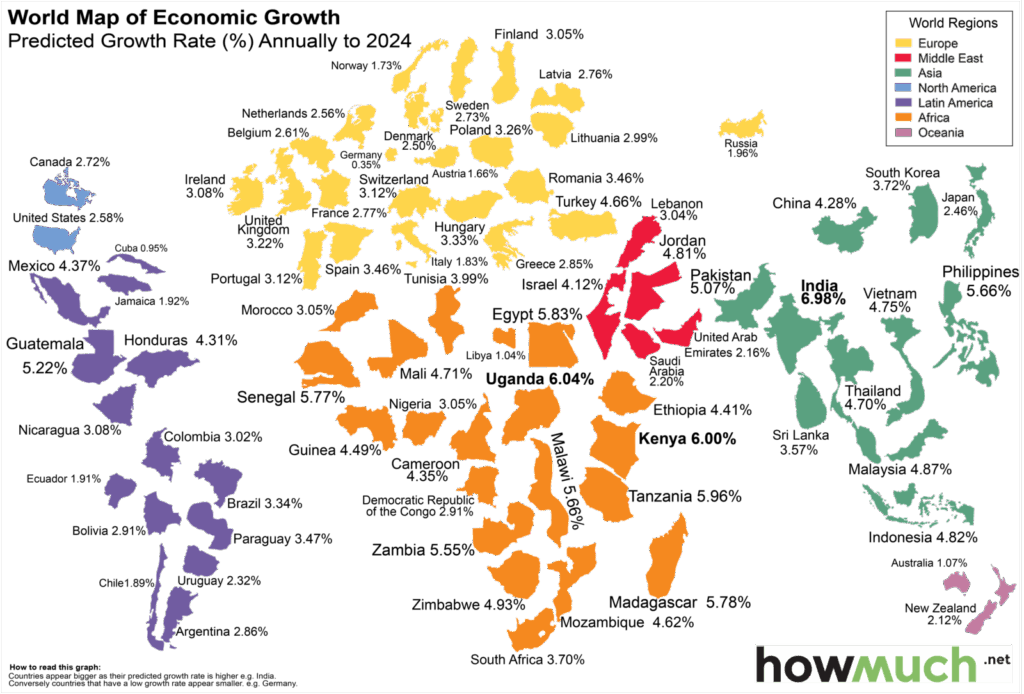
And then, almost like clockwork, something blew up somewhere.
A war. A conflict. A regime in need of changing. A terrorist organization that suddenly had access to very sophisticated weapons and the fragile economic progress that had been building in the developing world quietly unraveled: trade routes disrupted, currencies collapsed, foreign investment fled, and those countries found themselves, once again, lining up at the IMF or World Bank, hat in hand.
Is this just bad luck, a series of tragic coincidences? Or is there a pattern worth examining more honestly?
This piece isn’t going to hand you a verdict. That’s not the point. The point is to lay out what history shows us, what economists quietly discuss, and what some of the most respected political thinkers have written about — and then let you sit with the question.
Because sometimes the most important thing isn’t the answer. It’s asking the right question in the first place.
Capitalism’s Two Dirty Secrets
Capitalism is, without question, the most successful economic system humanity has tried at scale. It has lifted billions out of poverty, funded medical breakthroughs, and produced a standard of living that previous generations could not have dreamed of.
But it has two fundamental requirements that don’t make onto motivational posters.
The first is poverty.
Not poverty as a regrettable side effect — poverty as a structural necessity. Capitalism requires a labor pool that needs wages. It requires consumers who aspire to own more. It requires debt — mortgages, student loans, national loans — because debt means interest, and interest is someone’s profit. A world where everyone is comfortably self-sufficient is, from a purely mechanical standpoint, a world where capitalism has very little room to grow.
The economist Thorstein Veblen wrote about this as far back as the late 1800s. More recently, writers like David Harvey and even mainstream economists list Joseph Stiglitz, a former World Bank chief economist and Nobel laureate, have pointed out that inequality isn’t a bug in the capitalist system. In many ways, it’s a feature.
The second is resource dependency.
The engine of industrial capitalism runs on raw material — oil, gas, rare earth minerals, agricultural land, water — and the uncomfortable geographic truth is that most of these resources sit under the ground or in the soil of what we politely call the “developing world.”
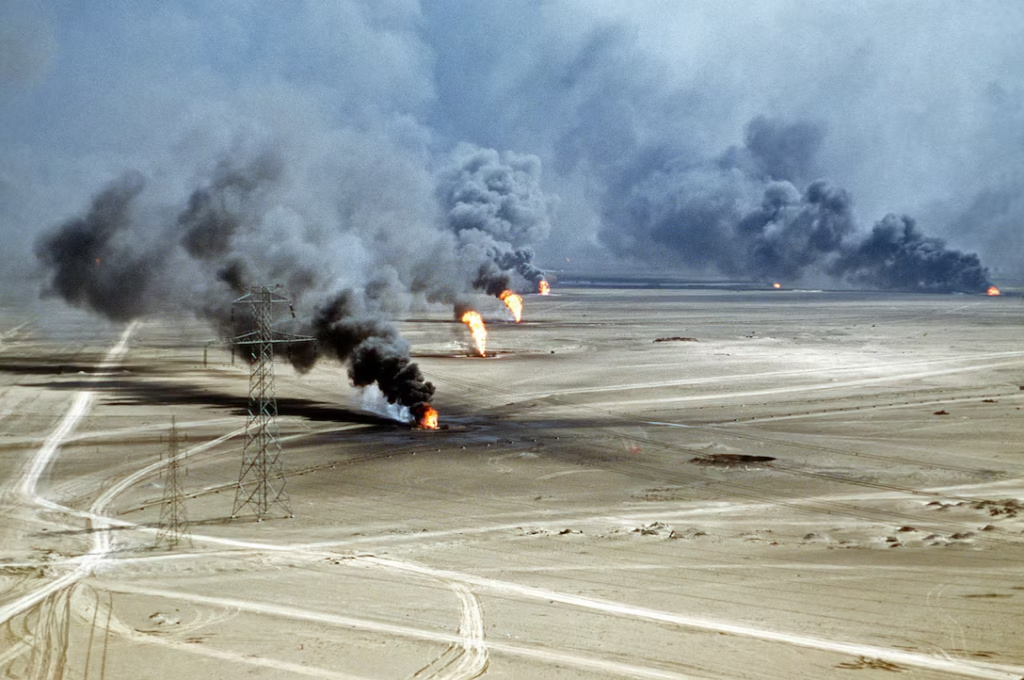
For the system to keep running smoothly, those resources need to keep flowing — ideally at prices set by buyers, not sellers. An economically strong, politically independent Congo or Iraq or Venezuela is a Congo, Iraq or Venezuela that might start charging market rates for what’s under its soil, or worse, decide to sell to whoever they like.
An economically independent developing nation is, by definition, a less dependent one. And dependency is the lifeblood of a certain kind of economic relationship.
History Has a Pattern, If You Know Where to Look
Let’s walk through some moments in modern history, not to assume blame, but to notice the timing.
Post-WWII and the Marshall Plan
After the World War II, the United States launched the Marshall Plan to rebuild Europe. It was genuinely generous and genuinely strategic — a rebuilt Europe was a market for American goods and a buffer against Soviet expansion. But while Europe was being rebuilt with investment, much of Asia, Africa and the Middle East was being restructured through a different mechanism: the carving up of colonial territories into new nations with borders that made geographic sense to Europeans, not to the people living there.
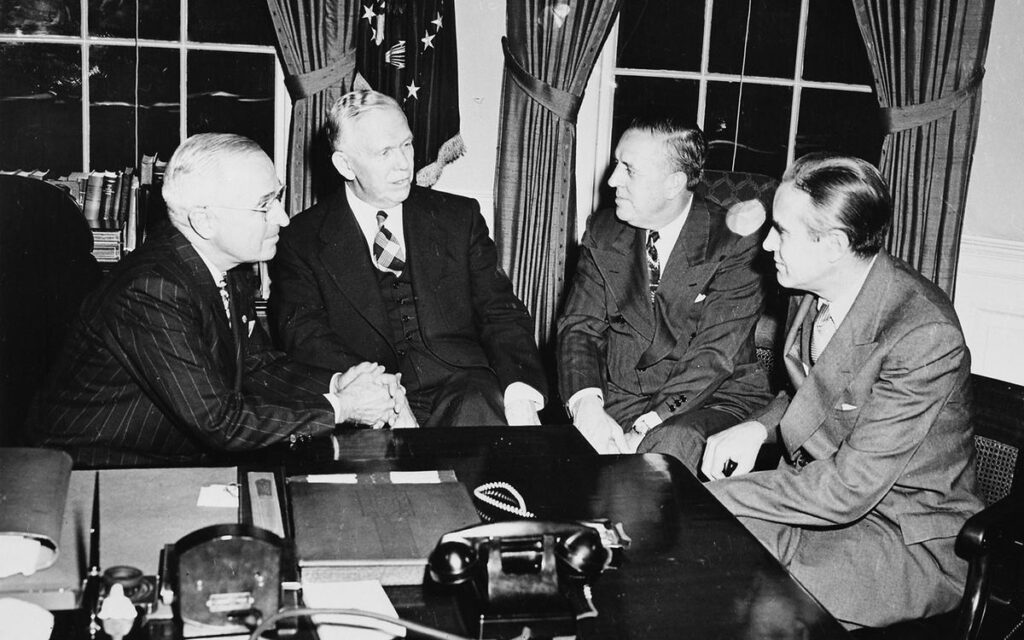
Those artificial borders — most famously in the Middle East, Africa and the Indian subcontinent — were seeds of future conflict, planted deliberately or carelessly, that would bear bitter fruit for decades. They ensured that newly independent nations would spend their early decades fighting each other rather than building economies.
The 1970s Oil Boom and Its Aftermath
In the early 1970s, something remarkable happened. The Organization of Petroleum Exporting Countries (OPEC), made up mostly of Arab nations, decided they were done letting Western oil companies set the price of their oil. They nationalized their resources and tripled, then quadrupled prices.
For a brief moment, wealth was flowing from the industrialized world to the developing world. Gulf states were building universities. Venezuela was funding social programmes. Libya was investing in infrastructure. Countries that had historically been price-takers were, for a change, price-setters.
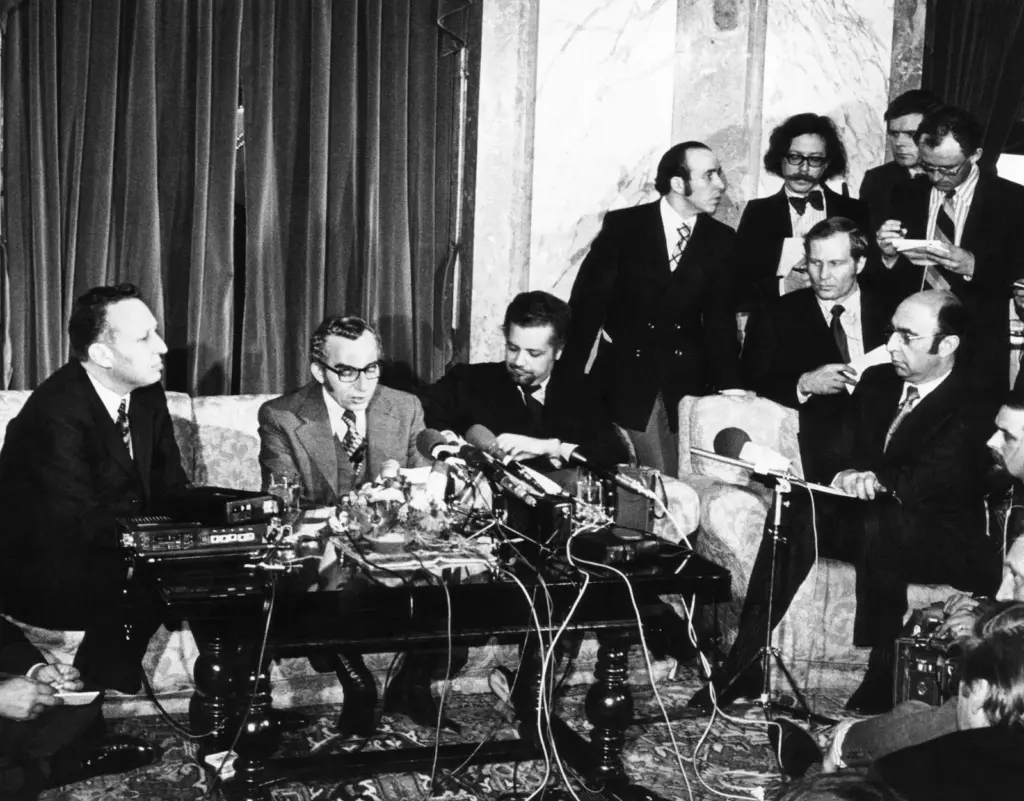
By the 1980s, the situation had been substantially reversed — through a combination of a price war engineered party by Saudi Arabia (a close US ally), International Monetary Fund “structural adjustment” loans that came with conditions requiring privatization and reduced government spending, and the destabilization of governments that had been too enthusiastic about redistribution.
Iraq: The Inconvenient Timeline
In the decade before the 2003 invasion, Iraq under UN sanctions was an economic disaster. But by the late 1990s, there was growing pressure to lift those sanctions. Oil prices were rising. Iraq’s oil reserves — the second largest in the world — were being eyed by several countries.
French and Russian oil companies had been negotiating contracts with the Iraqi government. China was expressing interest. Had sanctions been lifted and Iraq allowed to develop those reserves under Saddam Hussein’s government, the contracts almost certainly would not have gone to American or British companies.
The invasion happened. The contracts were renegotiated. This is not a conspiracy theory — the post-invasion oil contract allocations are a matter of public record.
Libya: From Africa’s Wealthiest to Chaos
Back in 2010, Libya had the highest Human Development Index in Africa. It had free healthcare, free education, subsidized housing, and one of the lowest poverty rates on the continent. More significantly, Muammar Gaddafi had been pushing for years for an African gold-backed currency — the “Gold Dinar” — that would allow African nations to trade with each other without going through the US dollars or European currencies.
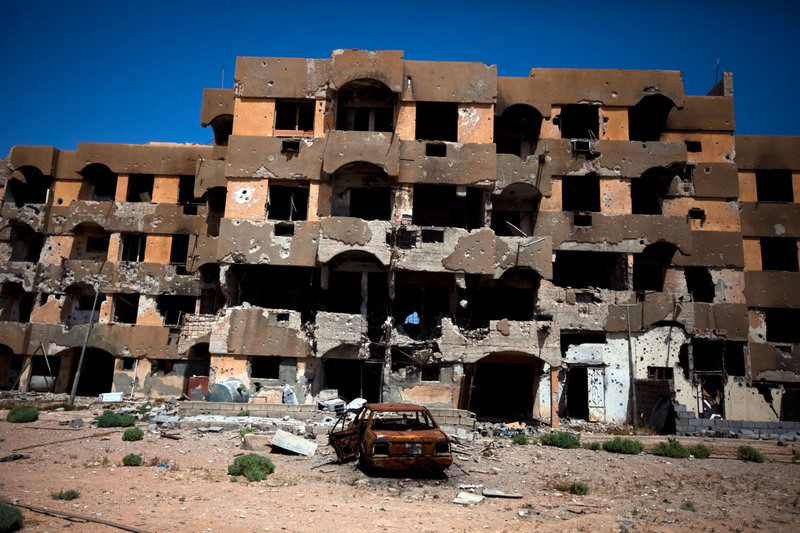
A year later in 2011, NATO-backed forces toppled the Gaddafi government. Internal Hillary Clinton emails, later released under Freedom of Information requests, explicitly mentioned Gaddafi’s gold currency plans as a concern motivating French support for the intervention.
Libya today is a fractured, failed state with open slave markets. Its oil flows, but the profits no longer fund free hospitals.
The Gold Dinar died with Gaddafi. Africa’s most developed nation became its most vivid cautionary tale.
The Debt Trap: War’s Quieter Cousin
You don’t always need bullets to keep a country dependent. Sometimes a chequebook works just as well.
The mechanism is straightforward. A developing nation need infrastructure — roads, dams, ports. An international lender, often the IMF or World Bank (both institutions where the US holds effective veto power), offers loans. The loans come with conditions, typically referred to as “structural adjustment programmes” or, in their more recent rebranding, “economic reform packages.”
These conditions almost universally require: privatization of state assets, reduction of government subsidies (meaning fuel, food and medicine become more expensive for ordinary people), opening of markets to foreign competition (which often destroys local industries), and keeping interest rates high (which makes domestic borrowing expensive).
John Perkins, a former economic consultant to the World Bank, wrote about this in his controversial but extensively documented memoir. His thesis: the goal was never to develop these countries. The goal was to create debt obligations so large that the country’s resources and political decisions would, in practice, be directed by creditors rather than elected governments.
Whether you find Perkins entirely credible or not, the outcomes, he describes are measurable. Countries that took on large IMF loans in the 1980s and 1990s generally emerged from the process more indebted, with weaker public services, and with their key industries owned by foreign corporations. The ones that refused — Malaysia in 1998 being the most famous example — generally fared better.
The China Moment
Here is where the pattern becomes particularly interesting to observe in real time.
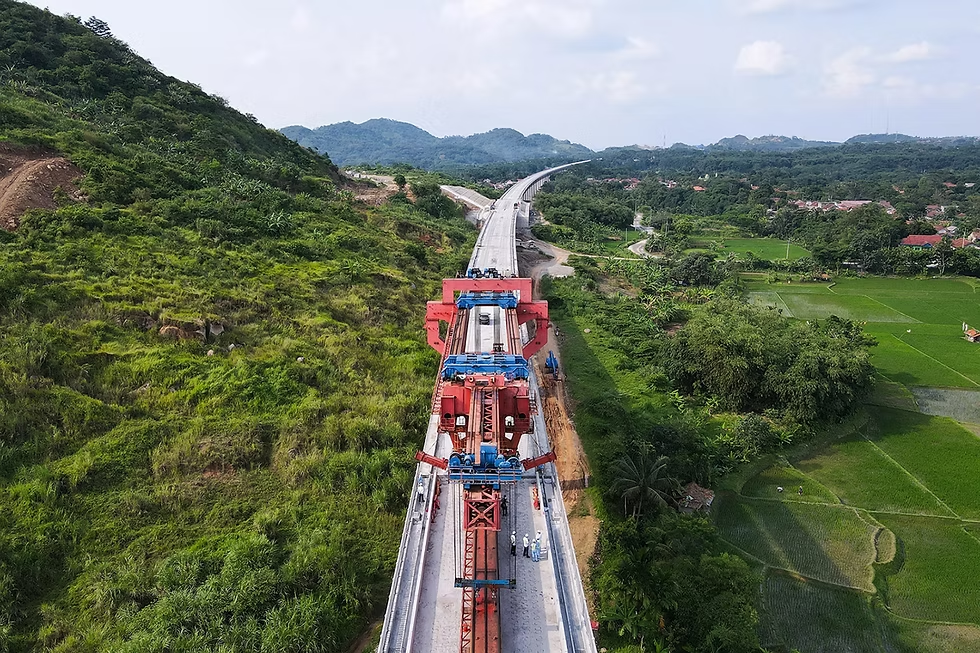
Over the past two decades, China has been doing something that Western financial institutions historically did not: offering infrastructure loans to African, Asian, and Latin American countries without the ideological conditions attached. You want a port built? China will build it, and they were not asking you to privatize your water supply in return.
The results have been genuinely mixed — some of these deals have been predatory in their own way, and the “debt trap” criticism applies to Chinese lending too. But the crucial difference is competition. For the first time in decades, developing nations have an alternative to Western financial institutions. They can negotiate.
Notice what has happened in the years since China’s influence in Africa, the Middle East and Latin America began to grow significantly. The language of “great power competition” has returned to Western foreign policy with urgency. Countries that lean toward Chinese investment have found themselves dealing with sudden political instability, sanctions pressure, or in some cases, coups.
This is not to say China is a benevolent actor. It isn’t. But the pattern of pushback against economies that try to operate outside the Western financial architecture is consistent and worth noting.
Russia, Ukraine, and the Energy Question
Whatever your position on the Russia-Ukraine War — and there are legitimate moral positions across the spectrum — there is an economic dimension that rarely gets discussed in mainstream coverage.
Prior to the conflict escalating in 2022, Germany and much of Europe had built deep energy dependencies on Russian natural gas. This was not merely convenient — it was economically transformative for both sides. Russia had stable revenue. Germany had cheap energy that made its industrial sector globally competitive.
The Nord Stream pipeline represented something bigger than energy supply: it represented a level of European-Russian economic integration that, if it deepened, would have reduced Europe’s dependency on American liquefied natural gas (LNG) — which is significantly more expensive.
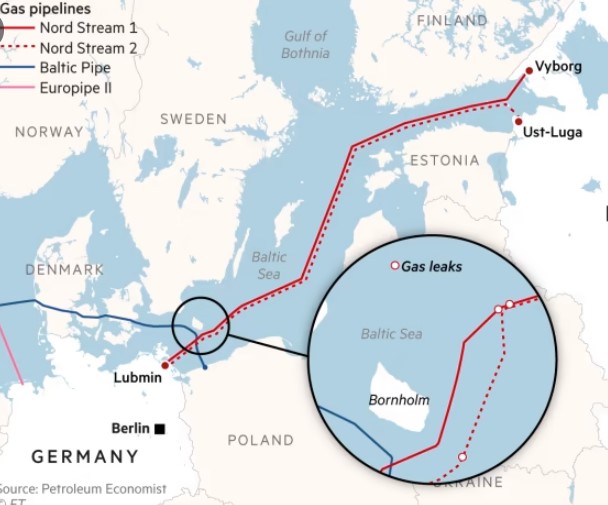
After the conflict began and Nord Stream was — in one of the most extraordinary and still inadequately explained events of 2022 — destroyed in what most investigators believe was a deliberate act of sabotage, Europe found itself buying American LNG at higher prices. American energy companies posted record profits. European industrial competitiveness took a severe hit.
The journalist Seymour Hersh, citing intelligence sources, attributed the sabotage to the United States. The US government denied this. The official investigations have produced no public conclusion. But the beneficiaries of the pipeline’s destruction are not ambiguous.
The pipeline that connected two economies is gone. The economy that sold the replacement energy is not the one that was losing.
The Pattern, Laid Out Plainly
Let’s try to state the observation clearly, without editorializing:
- When developing nations grow economically self-sufficient, they reduce their dependency on Western financial institutions and multinational corporations
- When they start paying off debt or building alternative trade networks, the flow of resources and profits back toward wealthy nations slows
- Major conflicts in resource-rich regions tend to occur not when those regions are at their most desperate, but when they are approaching self-sufficiency or regional influence
- The aftermath of these conflicts tends to involve broken economies, new debt obligations, foreign control of natural resources, and governments that are more amenable to Western interests
Now. Is this a coordinated, deliberate conspiracy? That is a much harder claim to make, and this piece is not making it. Large historical patterns can emerge from the sum of many self-interested decisions made by governments, corporations and financial institutions, without anyone sitting in a room and drafting a master plan.
What we can say is this: the structure of the global economic system creates powerful incentives for certain outcomes. Institutions and governments acting in their own rational self-interest will naturally resist arrangements that reduce their power. The result, whatever its cause, looks remarkably consistent across decades and continents.
What Would Prove This Wrong?
Good critical thinking demands we ask: what evidence would disprove this pattern?
If the pattern were purely coincidental, we would expect to see major Western-backed military interventions occurring equally across all regions — not concentrated in oil-rich or strategically resource-significant areas. Moreover, we would expect to see post-conflict economies recovering under genuine local control, rather than under foreign-contracted reconstruction. Besides this, we would anticipate debt relief to come without conditions that benefit creditors.
We would expect the loudest opponents of a given intervention to be wrong about the economic consequences at least some of the time.
Some of these tests are not conclusively passed, but some are. The picture is complicated, and intellectually honest people can look at the same evidence and reach different conclusions about intent versus outcome.
But “it’s complicated” is not a reason to stop asking the question. It’s a reason to ask it more carefully.
So Where Does This Leave Us?
If you have read this far, you are probably either nodding vigorously or rolling your eyes. Both responses are worth examining.
Now, if you are nodding: be careful. Pattern recognition is one of humanity’s greatest gifts. However, it can also lead us to see intention where there is only consequence, and conspiracy where there is only structural incentive. The world is messy. People are stupid, greedy and short-sighted in ways that produce terrible outcomes without any need for a masterplan.
And, if you amongst those who are rolling your eyes: ask yourself whether your skepticism is based on evidence, or on the discomfort of thinking that powerful institutions might act in ways that harm ordinary people for economic gain. History is absolutely full of examples of exactly this happening — the East India Company, the Belgian Congo, Standard Oil, United Fruit Company. These are not fringe theories. They are in the history books, named and documented.
The question this piece is raising is simply: has the mechanism changed, or just the names?
The most dangerous thing is not the wrong answer. It’s the unasked question.
A Final Note on Good Faith
This is not an anti-Western piece. Western democracies have produced extraordinary things: scientific progress, human rights frameworks, standards of living that are genuinely the best in human history. The critique here is not of the people, and not even of the system in its entirety. It is of specific incentive structures that, left unexamined and unchallenged, produce outcomes that most people — including most Westerners — would find troubling.
The solution, if there is one, involves transparency, stronger international institutions that are genuinely multilateral, debt systems that do not trap nations in perpetual dependency, and a media landscape that asks harder questions when a country was getting economically confident suddenly needs to be liberated.
None of that happens, though, without citizens who are willing to ask uncomfortable questions. Not just about their political opponents — but about the systems they live inside, benefit from, and rarely examine.
That, more than anything, is the point of this piece.