

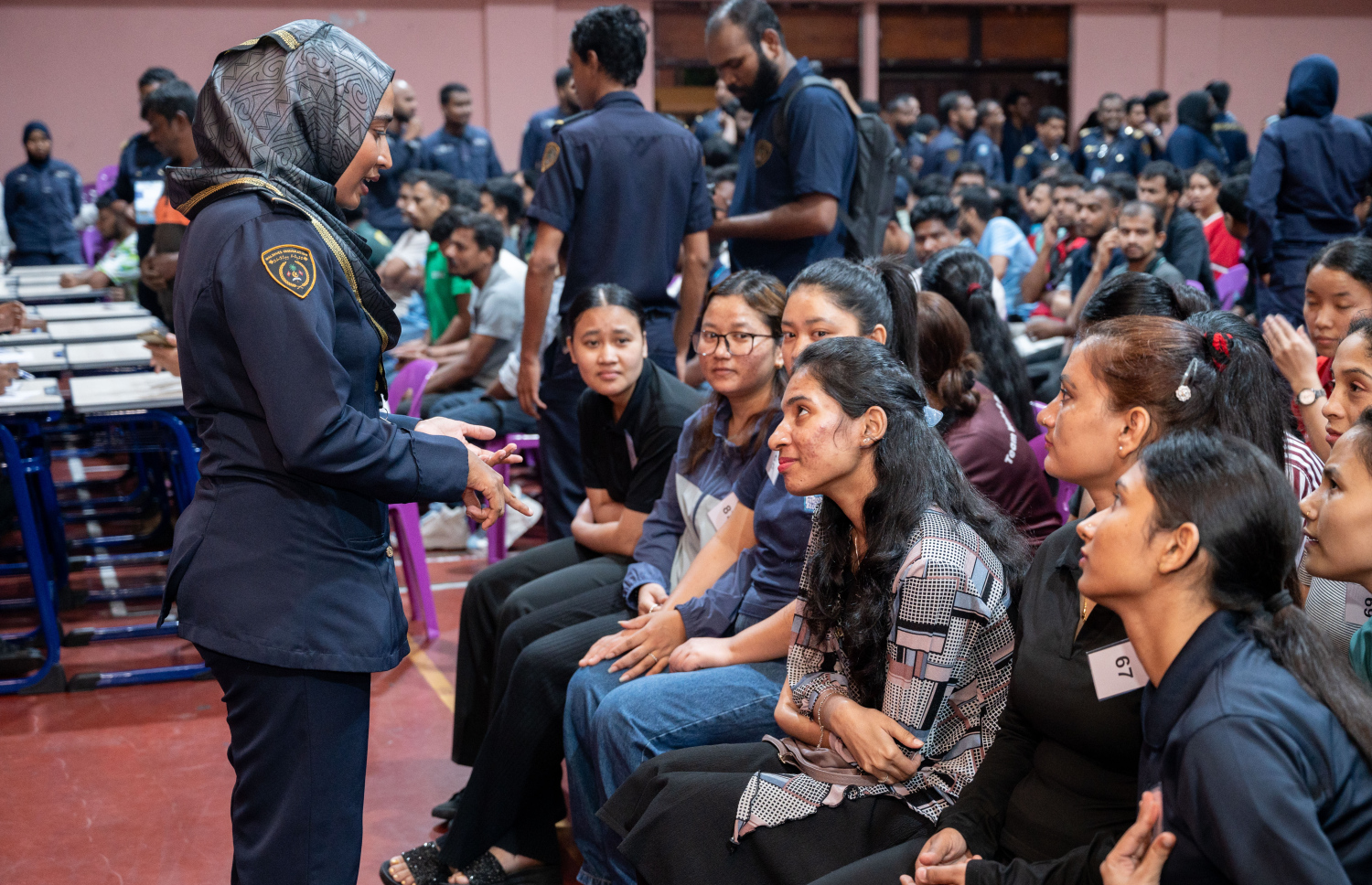

The Operation Kurangi biometric drive has logged fingerprints and updated photographs of 98% of the country’s legally documented migrant workers, a number the government is calling its biggest single dent in the undocumented immigrant problem in years.
The Ministry of Homeland Security, Labour and Technology runs the operation. It launched on May 2, 2024. Two years later, the figure has lifted from 13% to where it stands today.
For decades, the Maldives has lived with the same two-pronged problem. Tourists overstay their visas. Workers slip away from their sponsors and reappear on different islands, working for cash. Past administration talked about fixing it. None did. The records simply did not exist to make enforcement possible at scale.
A Change in the Script
Homeland Security Minister Ali Ihusaan has been blunt about why earlier crackdowns went nowhere. Officers picked people up. The system could not tell them who they were, where they had come from, or whether they had arrived legally. The paperwork did not exist, so the case did not stick.
The Operation Kurangi biometric drive flips that. The database now holds verified identity records — fingerprints, photographs, employer details — for nearly every documented migrant worker in the country. Once the operation closes, the government expects the database to cover every foreign worker in the Maldives. Officers in the field will be able to verify identity, nationality, and place of work in seconds, even when a worker carriers no physical ID.
The government has paired the data drive with a clear choice for those still unregistered. Come forward and regularize. Refuse, and face deportation.
For business owners, the implications hit close to home. Workers who slip out of legal sponsorship are typically the ones who end up running unauthorized retail stalls, informal services, and side-hustle commerce. The Operation Kurangi biometric drive shrinks the space those operations rely on. Furthermore, sponsors who lose track of their workers will find it harder to leave the situation unresolved when the database flags discrepancies in real time.
The minister framed the rollout as proof that political will plus institutional coordination can move long-stalled problems. Border control tightens. Enforcement gets sharper. Crime involving foreign nationals — historically harder to prosecute when identification gaps existed — becomes more traceable.
The Big Picture
The wider economic angle matters too. The Maldives runs a labour-intensive tourism and construction base. Foreign workers fill jobs that local labour does not cover. A clean migration record system therefore protects two things at once: the legal workers who follow the rules, and the integrity of the labour market they operate within. International confidence in the country’s migration management strengthens as the data trail grows.
The remaining 2% is the next test. Closing it will determine whether the Operation Kurangi biometric drive ends as a structural reform or stalls just short of completion. The government wants the operation wrapped quickly. On the current trajectory, that finish line looks closer than it has in years.