

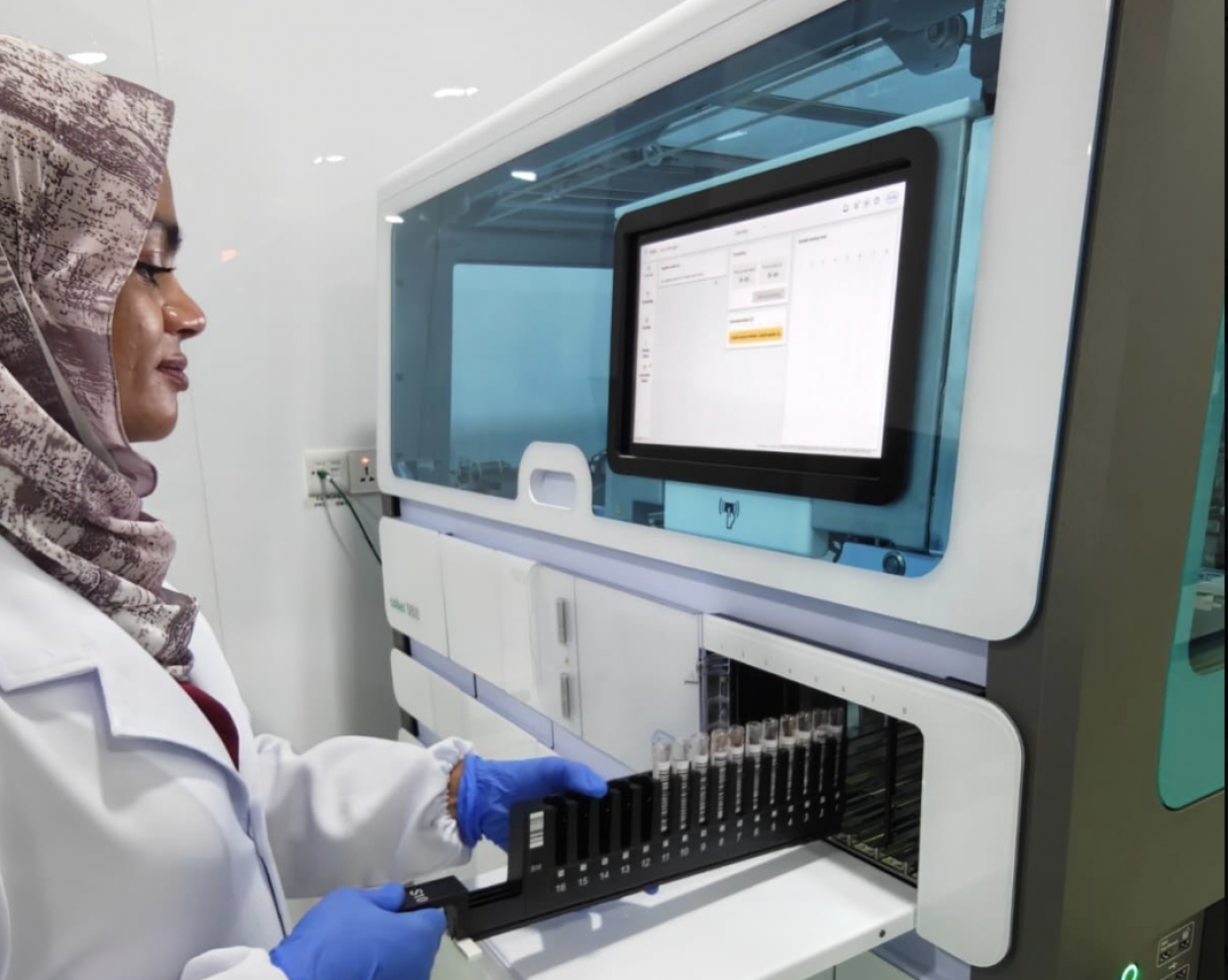

The Maldives Blood Services (MBS), operating under the Male’ City Group of Hospitals, has officially launched Nucleic Acid Testing (NAT) for blood testing on Thursday, 23 July 2026.
This marks the first time such a service has been introduced in the Maldives.
Abdul Razzak Haleem, Chief Executive Office of Dharumavantha Hospital, stated that this is a historical milestone in modernizing the blood services of the Maldives.
NAT technology is internationally recognized as the “gold standard” for detecting dangerous viruses that may be present in donated blood. Health experts agree this technology allows conditions such as HIV, Hepatitis B (HBV) and Hepatitis C (HCV) to be detected significantly faster and with greater precision compared to conventional tests.
Key Difference in Testing Methods
Previously used antibody tests required a specific duration, known as the ‘window period’, for the body to produce antibodies before an infection could be detected. Unlike the conventional antibody test route, NAT directly detects the DNA and RNA of the virus, and can confirm the presence of an infection within just a few days of the virus entering the body. This substantially reduces the period during which a person is infected but tests negative.
Haleem noted that introducing this service is a major national step aligned with the policies and pledges set out by President Dr. Mohamed Muizzu to strengthen the healthcare sector and improve the quality of services.
He further highlighted that this development aligns with national blood service standards and the strategic goals outlined in the “Maldives Thalassemia Master Plan 2024-2034.”
Data from MBS indicates that the number of blood donors in the Maldives has been increasing annually, with strong support particularly noted from youth aged 18 and above. While donor screening is conducted in accordance with WHO guidelines, the implementation of NAT technology aligns the Maldives’ blood services with the highest international standards.