

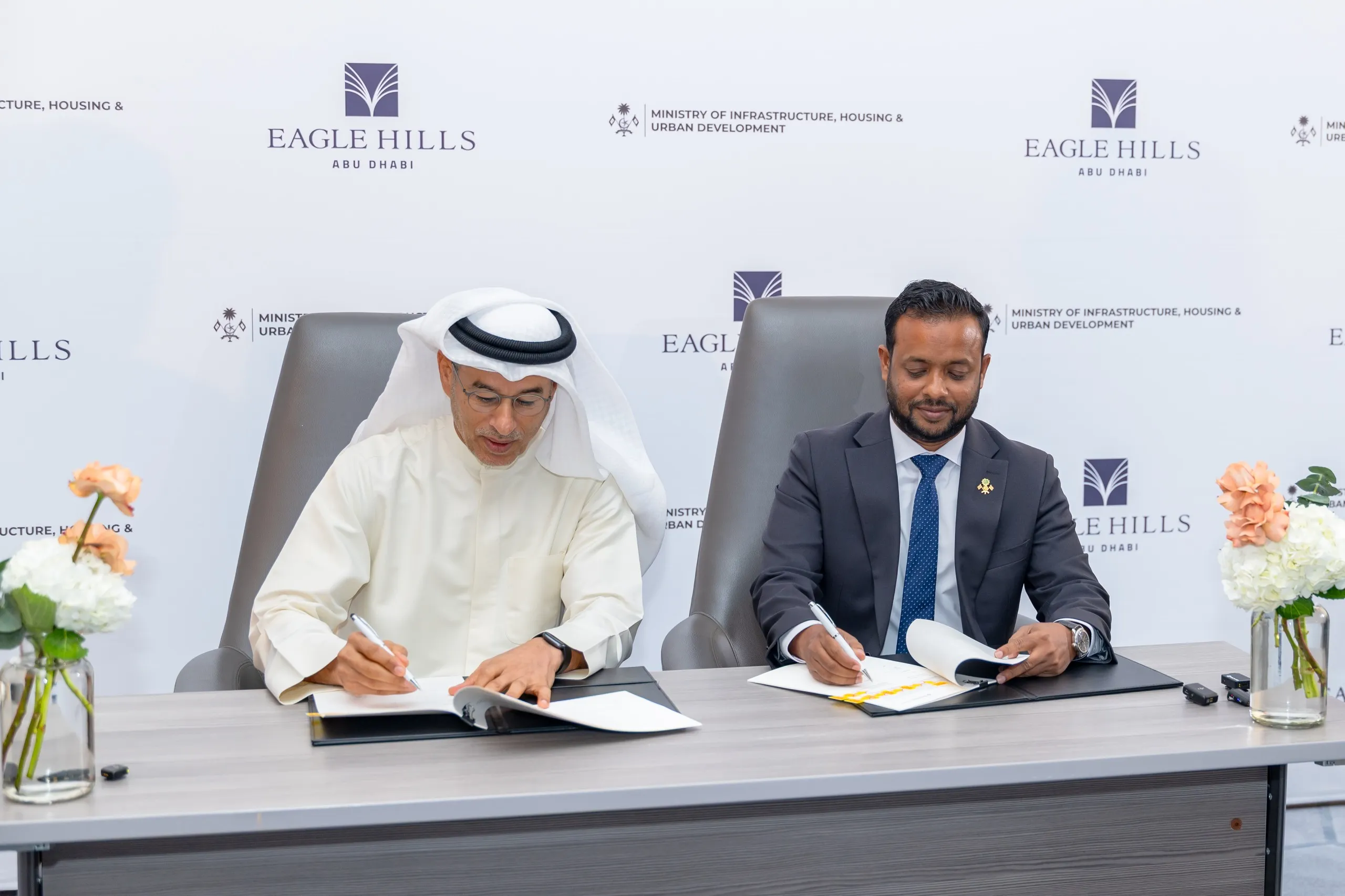
Infrastructure Minister Dr Abdulla Muththalib has said the agreement signed with Abu Dhabi’s Eagle Hills to develop The Maldives Waterfront and Marina at Rasmalé is the largest investment in the country’s history, and that was secured without the state granting any tax concession and without the government taking on any debt.
Speaking to the media after the signing, the minister said that the state will earn direct revenue from the various goods and services sold under the project, and that billions of dollars in foreign investment will circulate through the Maldivian banking system.
He added that the project will deliver housing to thousands of Maldivian families, and create more than 54,000 jobs.
What did the minister say about tax?
This was the point Muththalib chose to press hardest.
“This project was agreed without any tax holiday or tax exemption,” the minister said. “All activities carried out in Rasmalé will be taxed under the general laws of the Maldives.”
Large foreign developments in this part of the world have usually come with generous incentive packages attached, and the Maldives itself passed a Special Economic Zones framework in 2025 which offers exactly that sort of relief to qualifying investors. The minister’s statement places the Eagle Hills project outside that approach, at least on paper.
Why does the banking point matter?
The Maldives has spent much of this year short of dollars. Businesses have waited weeks for telegraphic transfers, traders have turned to the black market to pay overseas suppliers, and the government has just brought foreign tour operators into the GST net partly on the grounds that tourism money is being settled abroad and never reaching local banks.
A promise that billions of dollars from this project will pass through Maldivian banks is therefore not a minor detail. If it holds, it is the part of the deal that matters most to the economy in the near term. However, the minister did not explain how that will be ensured; whether through a condition in the agreement, a requirement that sale proceeds be deposited locally, or simply an expectation.
How does the minister describe the project’s wider purpose?
Muththalib said the development is an important step towards building a world-class real estate industry in the Maldives, in addition to tourism.
He also described it as a decisive move in the government’s plan to make the Maldives a high-income country by 2040.
Praising Eagle Hills chairman Mohamed Alabbar, the minister said it was a great honor to Rasmalé to have partnered with a company whose history includes city-scale developments such as Downtown Dubai and Belgrade Waterfront.
A local media outlet reported that Emaar, the Dubai developer behind the Burj Khalifa and Dubai Mall, will also take part in the project. This is somewhat firmer than Alabbar’s own account to Bloomberg earlier in the day, in which he said that Emaar could participate.
What will be built?
According to the ministry, the project will include international-standard tourism facilities and a modern marina, high-end and branded residences, waterfront entertainment, and commercial, dining, wellness, education, health and community facilities.
Land and buildings will be sold under a leasehold arrangement of up to 99 years. Each time ownership changes hands, whether through sale or inheritance, a fresh 99-year lease will begin.
Eagle Hills estimates the phased project will involve a total investment of USD 20 billion, create more than 54,000 jobs, attract over one million visitors a year once complete, and generate USD 2 billion annually in tourism revenue.
What has not been answered?
The first is the size of the deal itself. While the ministry and the Maldivian press have reported USD 20 billion, Khaleej Times and Bloomberg both reported the project at USD 12 billion on the same day. Nobody has yet explained the gap.
The second is the nature of the agreement. As reported in the UAE, it sets out the shared vision and principal commercial terms, with the detailed terms to be worked out as the project moves forward. The financing plan and construction start date have not been made public.
The third is land, which a local media reported as half of Rasmalé going to Eagle Hills for the project. Rasmalé was launched in December 2023 as the government’s answer to the housing crisis in the capital, with 65,000 housing units planned. The Housing Ministry says no plots or flats promised to citizens will be lost, but the masterplan showing how that will work has not been released.