

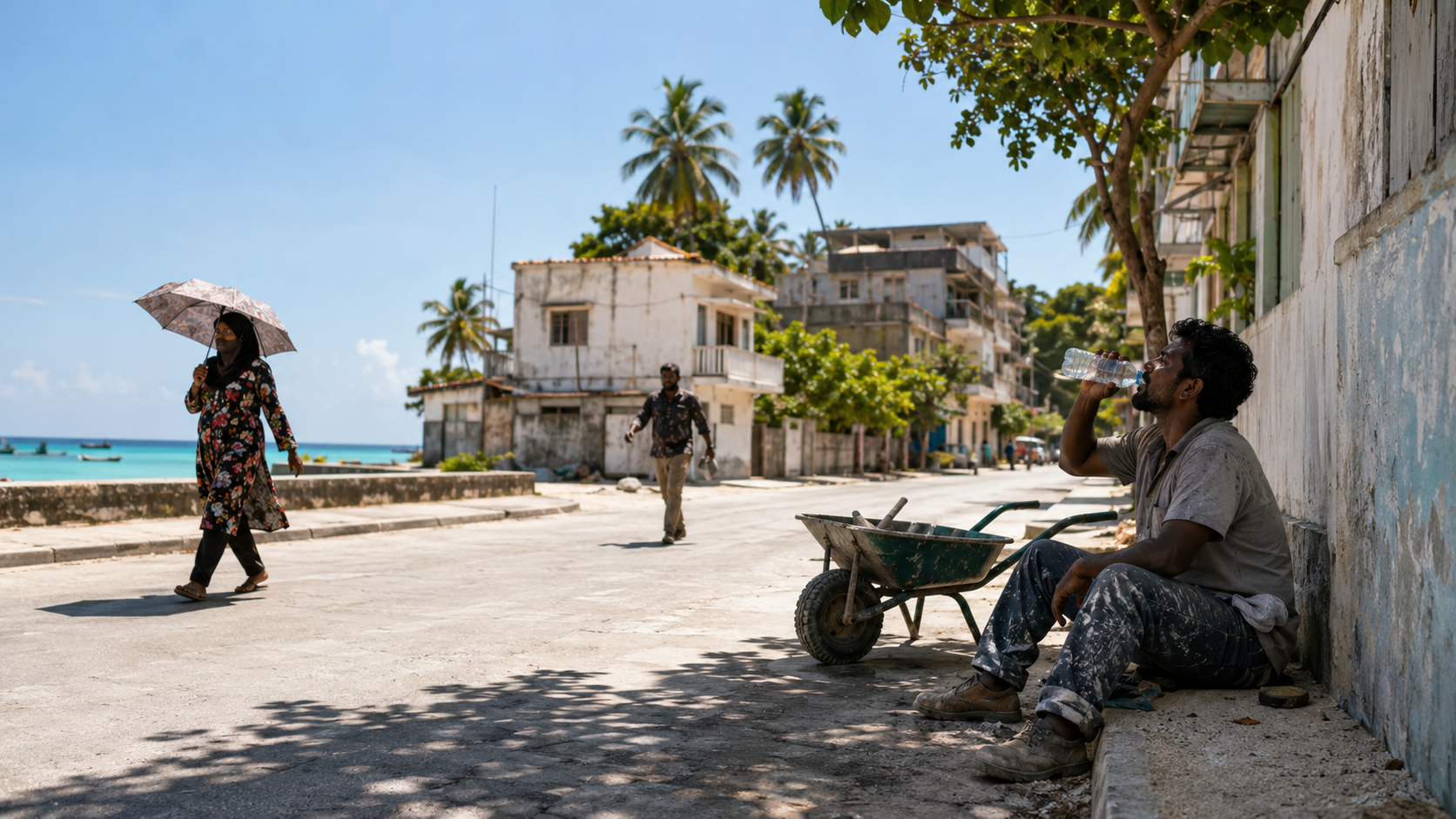

The Maldives has always experienced a warm and humid tropical climate, but many people now feel that the heat is becoming increasingly difficult to endure. Hotter days, warmer nights and high humidity are affecting daily life, public health, outdoor work and the comfort of communities across the country.
According to the Maldives Meteorological Service, temperatures in the Maldives generally range between 25°C and 32°C, with the warmest period usually occurring from March until the onset of the southwest monsoon in mid-May. However, high humidity can make the temperature feel considerably hotter than the figure shown on a thermometer. (Maldives Meteorological Service)
The heat being experienced in the Maldives is also part of a broader global trend. The World Meteorological Organization confirmed that 2025 was one of the three warmest years on record, at approximately 1.43°C above the 1850–1900 average. The years from 2015 to 2025 were the 11 warmest years ever recorded. (World Meteorological Organization)
Heat Is More Than an Inconvenience
Extreme heat is not simply a matter of discomfort. It can become a serious health risk, particularly for children, older people, pregnant women, people with existing medical conditions and those who work outdoors.
Construction workers, fishermen, farmers, harbour workers, delivery personnel and others who spend long hours outside face increased exposure to heat and direct sunlight. Without sufficient shade, drinking water and rest periods, prolonged exposure can cause dehydration, exhaustion, dizziness and heatstroke.
The World Health Organization identifies heat stress as a leading cause of weather-related deaths. It can also worsen cardiovascular disease, diabetes, asthma and other underlying health conditions. Heatstroke is a medical emergency that requires immediate treatment. (World Health Organization)
Warmer Nights and Growing Energy Demand
In densely populated areas such as Malé, Hulhumalé and other urbanising islands, concrete buildings, paved roads, limited vegetation and heat released by vehicles and air-conditioning systems can intensify local temperatures.
Buildings absorb heat during the day and release it slowly after sunset, making it more difficult for homes to cool naturally at night. This can affect sleep, health and productivity while increasing dependence on fans and air conditioning.
Higher electricity consumption also places additional pressure on households, businesses and island power systems. Families with limited income may be particularly affected because they are less able to afford continuous air conditioning or improvements to make their homes cooler.
Effects on the Ocean and Island Environment
The effects of rising temperatures are not limited to the land. A warming climate also contributes to higher ocean temperatures, coral bleaching, changing marine ecosystems and rising sea levels.
Healthy coral reefs are essential to the Maldives. They support fisheries, protect islands from waves and erosion and form the foundation of the country’s tourism industry. Damage caused by marine heat can therefore affect food security, employment, coastal protection and the wider national economy.
Trees and natural vegetation also play an important role in reducing heat. However, the removal of mature trees for construction and urban development can leave communities with fewer shaded public areas. New developments must therefore balance infrastructure needs with the preservation and expansion of green spaces.
Protecting People from the Heat
Government institutions, councils, employers and communities must treat heat as a growing public-health and development concern. Practical measures should include:
- Providing shaded rest areas and drinking water for outdoor workers.
- Adjusting working hours to avoid the most intense heat of the day.
- Planting and protecting shade trees on inhabited islands.
- Designing buildings with better ventilation, insulation and heat-reflective materials.
- Creating cooler and greener public spaces.
- Issuing clear public advisories when dangerous heat conditions are expected.
- Ensuring schools, health center’s and workplaces have appropriate heat-management plans.
Individuals should also drink water regularly, avoid unnecessary exposure to the midday sun, wear light and breathable clothing and check on children, older people and those with existing health conditions. Anyone experiencing confusion, fainting, severe weakness or unusually hot skin should receive urgent medical attention.
A Challenge Requiring Long-Term Action
The Maldives contributes only a small share of global greenhouse-gas emissions, yet it remains among the countries most vulnerable to climate change. Rising heat, warming seas, coastal erosion and sea-level rise are interconnected threats that require both international climate action and stronger adaptation at the national and community levels.
The heat people are experiencing should not be dismissed as merely uncomfortable weather. It is a warning that climate change is already influencing everyday life.
Protecting communities will require climate-sensitive urban planning, greener islands, resilient infrastructure, stronger public-health preparedness and greater awareness. Every new road, harbour, housing project, school and public building should be planned with the future climate in mind.
The Maldives cannot control global warming alone, but it can take meaningful steps to make its islands safer, cooler and more resilient. The decisions made today will determine how comfortably and securely future generations are able to live in their island communities.